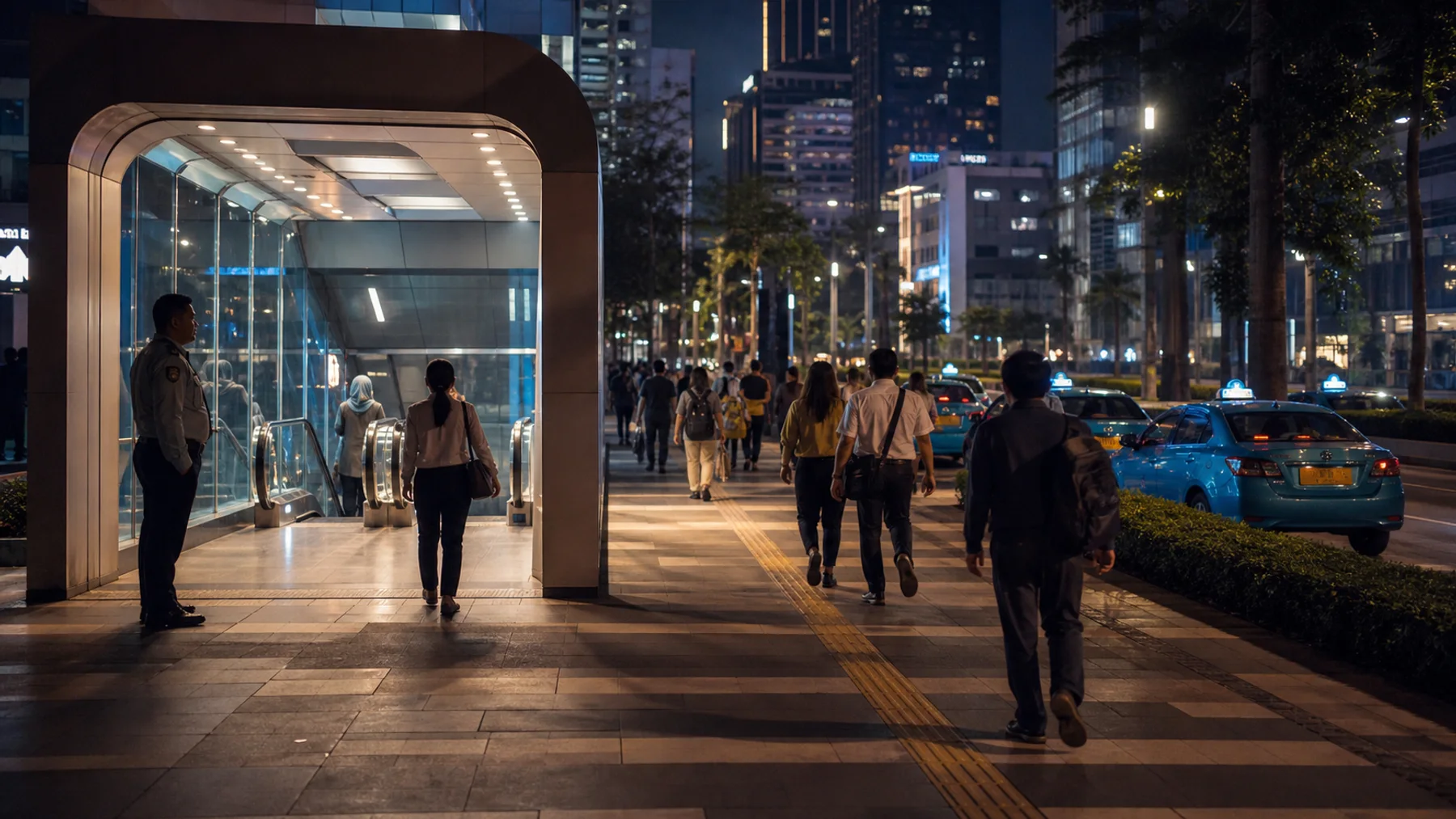
Short answer
Jakarta is safe enough for most visitors who behave like they are in a very large city. The risk profile is more practical than dramatic: traffic, road crossings, pickpocketing, bag snatching, taxi or app-ride judgment, late-night decisions, flooding after heavy rain, air quality, protests that can block roads, and normal health basics.
The wrong approach is tourist panic. The other wrong approach is pretending Jakarta is frictionless because you booked a nice hotel. It is a huge, busy capital. Plan your area, use proper transport, keep valuables controlled, and do not turn every small price difference into a crime documentary.
Match the risk to your actual Jakarta plan
Jakarta safety advice gets useless when it treats every visitor the same. A mall-and-MRT weekend has different risks from a nightlife trip or a flood-season cross-city schedule.
| Your plan | Main safety focus |
|---|---|
| First-time sightseeing | Traffic, crossings, heat, phone safety and avoiding too many cross-city moves. |
| Nightlife and bars | Late transport, alcohol decisions, drugs, ride verification and going home cleanly. |
| Business trip | Hotel area, airport transfer, event security and not losing documents. |
| Family trip | Road crossings, mall logistics, rain plans and short transport hops. |
| Rainy season visit | Flood-prone routes, weather alerts and flexible timing. |
| Solo traveler | Location sharing, clear pickup points and not being isolated late. |
Jakarta is not a city to fear by default. It is a city where boring planning prevents most of the problems tourists actually have.
What to check before you go
Before making safety decisions, recheck current travel advisories, protest notes, weather and flood information, air quality and local emergency details. Jakarta is not a panic city, but it is too large for stale assumptions.
Do these boring safety things first
Jakarta is safe enough for most visitors if you do the boring things well:
- Choose a practical hotel area.
- Use proper taxis, ride apps or clear public transport.
- Keep phones and bags controlled in crowds and near roads.
- Avoid careless road crossings.
- Do not get drunk and experimental late at night.
- Check rain, flood and air-quality conditions when the weather looks ugly.
- Leave protests, rallies and crowded political events alone.
That list is not dramatic. That is why it works.
Jakarta safety overview
| Risk | How it usually shows up | Practical answer |
|---|---|---|
| Traffic and road crossings | Long rides, chaotic junctions, motorbikes, impatient walking decisions | Use MRT where it fits, use reputable taxis or ride apps, cross carefully and do not rent a scooter for ego reasons. |
| Pickpocketing and bag snatching | Crowds, transport hubs, markets, nightlife, phones near the road | Keep phones away from the road side, use zipped bags and stay awake in crowds. |
| Scams and bad value | Fake tickets, unclear prices, app-driver confusion, card issues | Agree prices first, match app drivers, use secure ATMs and separate scams from normal price differences. |
| Nightlife | Alcohol, drink control, late rides, poor judgment | Watch drinks, use trusted transport, avoid illegal drugs and leave before the plan gets stupid. |
| Flooding and rain | Delays, blocked roads, wet walking routes, ride-hailing surges | Check BMKG and Pantau Banjir, keep plans flexible and use malls or hotels as reset points. |
| Air quality | Haze, PM2.5, bad outdoor comfort for sensitive travelers | Check ISPU or reliable air-quality data, reduce outdoor time on bad days and carry medication if needed. |
| Protests and big events | Road closures, crowds, police lines, sudden traffic changes | Avoid the crowd, change route and do not participate as a tourist. |
Where Jakarta feels easiest
Safety starts with location. In Jakarta, the better hotel base is often the safer-feeling base because it reduces late rides, confused pickups, bad road crossings and exhausted decisions.
First-time visitors usually do better in practical areas with easy transport and food nearby: Thamrin, Menteng, Sudirman, Kuningan, Senayan, SCBD, Blok M or another area that matches the trip. The exact answer depends on whether you care more about meetings, malls, nightlife, food, museums, airport access or train access.
Do not book a cheap room far from everything and then complain that Jakarta is impossible. Location is part of the price here. Use Where to Stay in Jakarta before booking, then build your safety plan around fewer messy transfers.
Traffic and road safety
Traffic is the main Jakarta safety issue because it touches almost every day. Road discipline can be rough, motorbikes appear from angles your home city may not consider legal, and a short distance on the map can still take too long.
Use MRT when both ends are near stations. It is usually the cleanest tourist transport move on the north-south corridor. Use the Jakarta MRT guide for tourists before building a day around it. Use Transjakarta when the route is direct and you understand the stop. Use Bluebird, Grab, Gojek or hotel-arranged transport when rain, luggage, late hours or fatigue make public transport annoying.
Cross roads carefully. Use crossings, pedestrian bridges and station connections when they exist. If a crossing feels bad, it probably is. Walk a little farther and keep your bones.
Do not rent a scooter in Jakarta unless you are already genuinely competent, licensed, insured and comfortable in dense traffic. Most tourists do not need one. Cheap is not always smart; sometimes it is just a cheaper way to create paperwork.
Pickpocketing and bag snatching
Petty theft is the normal big-city problem. It is not proof that Jakarta is uniquely dangerous. It is proof that phones, wallets and tired tourists have value.
The easy rules work: keep your phone away from the road edge, do not leave it on cafe tables, use a zipped crossbody or front-facing bag in crowds, keep one hand on your bag in markets and stations, and do not flash cash when paying. In cars, keep doors locked and bags away from open windows.
Be sharper in crowded transport, train stations, bus stops, Kota Tua, markets, nightlife streets, mall entrances, airport pickup zones and anywhere people are moving tightly. That does not mean avoid those places. It means do not wander through them with your passport pouch bouncing around like a donation box.
Scams, price differences and bad value
Jakarta has scams. Jakarta also has normal bargaining, convenience premiums, tourist pricing, weak English, bad value and simple confusion. These are different things.
Use secure ATMs in banks or malls, cover your PIN and check machines for weird attachments. Keep your card in sight during payments. Match app-car plates and driver photos before getting in. If someone outside the app says they are your driver, verify it inside the app or walk away. The Grab vs Gojek in Jakarta guide is the better place for app-specific ride habits.
For tours, tickets and events, buy from official channels or known platforms. If a deal depends on urgency, pressure or a stranger suddenly becoming your unpaid guide, slow down. Your holiday does not need a courtroom scene over a Rp50,000 difference.
Nightlife, alcohol and drugs
Jakarta nightlife is mostly a judgment test. South Jakarta, Blok M, SCBD, Senopati, Kemang and hotel bars can be fun. They are also places where tired travelers, alcohol and late transport meet.
Watch your drink being made, do not leave it unattended, and be cautious with drinks from strangers. UK travel advice warns about drink spiking and methanol poisoning in Indonesia. You cannot reliably identify methanol by taste or smell, so avoid mystery alcohol, suspiciously cheap spirits and anything that feels off.
Use trusted transport home. Share your ride in the app if useful. Do not walk long, poorly lit routes drunk with your phone out. Do not argue with security, police, drivers or strangers outside clubs.
Illegal drugs are not a travel personality. Indonesian drug laws are severe, and cannabis products, THC, CBD and edibles can create serious legal trouble. Leave that whole subject alone.
Floods, rain and air quality
Rain changes Jakarta quickly. Heavy rain can flood roads, slow ride-hailing, make walking miserable and turn a neat itinerary into a waiting game. This is not a reason to avoid Jakarta. It is a reason to check conditions before crossing town.
BMKG is the official weather source to check. Jakarta Pantau Banjir provides official flood-related information, including warnings, flood updates, water-level data and maps. If the weather is ugly, move the outdoor stop, wait in a mall or choose a closer dinner. Jakarta malls are useful because they have toilets, food, air conditioning, taxis and a place to stop pretending you enjoy being damp.
Air quality deserves a calm mention. Jakarta can have poor air days, especially for people with asthma, heart disease, lung conditions, older travelers, children and anyone planning long outdoor walks. DKI Jakarta publishes ISPU air-quality information, and the city-backed Rendah Emisi page pulls data from local monitoring stations, KLHK and U.S. Embassy AirNow stations. Check same-day readings instead of making sweeping claims.
If air is bad, reduce outdoor time, use indoor plans, wear a well-fitting mask if that helps you, and keep medication accessible. If you have a serious respiratory condition, discuss travel plans with a clinician before the trip.
Protests, events and crowded places
Jakarta is the capital, so protests and big public events happen. Most tourists will not run into a serious problem, but demonstrations can block roads, change traffic and create crowd-control situations.
Avoid protests, student rallies and political gatherings. Do not join for photos. Do not stand between police and a crowd because you want a dramatic story. Government buildings, major roads, embassies, Monas-area routes and business districts can be affected during events or demonstrations. Check local news, your hotel, ride apps and official alerts when traffic suddenly looks strange.
Crowded places such as malls, markets, stations and events are not automatically dangerous. They just require normal awareness. Keep bags controlled, know your exit, and handle passport ID deliberately. UK advice says travelers must carry a passport or stay permit in Indonesia; if you carry the original, secure it carefully and keep backup copies separately.
Solo, female and family travelers
Solo travelers can handle Jakarta with sensible area choice, data access and transport planning. Stay somewhere with easy food and pickups. Do not make your last ride home depend on improvising outside a club or event.
Solo female travelers should use the same big-city rules with a little less tolerance for vague situations: check driver identity, avoid isolated late-night walks, control drinks, share rides when useful and leave early if the vibe is wrong. That is not paranoia. That is refusing to outsource your safety to optimism.
Families should plan less per day. Heat, traffic, toilets, snacks and nap timing matter. A private transfer, taxi or hotel near the main plan can be worth the money because children do not care that you saved a few rupiah by adding three transport steps.
LGBTQ travelers should use discretion in public. Jakarta is a major city, but Indonesia is socially conservative in many settings and official travel advice notes legal and social risks in parts of the country. Read the room and avoid turning a holiday into a debate with strangers.
Emergency numbers and what to do first
In Jakarta, save 112 as the main local emergency number. Jakarta Siaga 112 is the city emergency call service and is designed for urgent situations such as accidents, disasters and health crises.
Also save these Indonesia numbers from government travel advice:
| Need | Number |
|---|---|
| Jakarta general emergency | 112 |
| Police | 110 |
| Ambulance / medical emergency | 118 or 119 |
Emergency response can vary. If something serious happens, get to a safe place first, then contact local emergency services, hotel staff, your insurer and your embassy or consulate if needed. For theft, ask police about a report because insurance may require one. For medical issues, contact your insurer early if the situation allows because hospitals may require deposits or payment arrangements.
Keep offline copies of your passport, visa, insurance policy, emergency contacts and hotel address. If your phone disappears, your entire plan should not disappear with it.
What to avoid
Avoid renting a scooter just because traffic looks annoying from inside a car. Avoid long walks beside fast roads with your phone in your road-side hand. Avoid isolated late-night routes, mystery alcohol, illegal drugs, unofficial ticket sellers, loose bags on chairs and ATMs that look tampered with.
Avoid protests and political crowds. Avoid pushing through flooded streets when you do not know the depth, current or open drains. Avoid outdoor-heavy plans on bad air days if you are sensitive.
Also avoid calling every inconvenience a scam. Jakarta is complicated enough without turning normal price differences into moral theater.
Common mistakes
- Booking a hotel far from the actual plan.
- Treating map distance as travel time.
- Holding a phone loosely near traffic.
- Using public transport in heavy rain with luggage and no fallback.
- Getting into a car before checking the app plate and driver.
- Treating a higher quote as fraud instead of comparing options calmly.
- Drinking too much and then trying to solve Jakarta at 2 a.m.
- Ignoring flood, weather and air-quality checks.
- Joining or filming protests from the middle of the crowd.
- Buying travel insurance without checking medical, evacuation, alcohol and transport exclusions.
Let us be honest: most Jakarta safety mistakes are boring. That is good news. Boring mistakes are easier to avoid.
FAQ
Is Jakarta safe for first-time visitors?
Usually, yes. Stay in a practical area, use trusted transport, keep phones and bags controlled, check weather, and avoid protests or sloppy nightlife decisions.
Is Jakarta safe at night?
Some areas are active at night, especially food, mall and nightlife districts. Use trusted rides, avoid poorly lit walks, manage alcohol and do not wander with valuables out.
Is Jakarta safe for solo female travelers?
It can be, with sensible hotel choice, transport planning, drink control and normal big-city caution. The main rule is simple: leave early when the situation feels vague.
Are taxis and ride apps safe in Jakarta?
They are usually practical. Use reputable taxis or app rides, check driver and plate details, share your trip if useful, and avoid drivers who try to move you outside the app.
Are Jakarta floods dangerous for tourists?
Flooding is usually a disruption issue for visitors, but it can become unsafe around deep water, traffic, drains and electrical hazards. Check BMKG and Pantau Banjir during heavy rain.
Is Jakarta air quality a serious issue?
It can be for sensitive travelers and on bad days. Check ISPU or reliable same-day air-quality data, reduce outdoor time when readings are poor and carry medication if you need it.
What emergency number should tourists call in Jakarta?
Use 112 for Jakarta Siaga emergency help. Also save 110 for police and 118 or 119 for medical emergencies.
Related guides
Sources for changing details
Travel advisories, emergency contacts, health guidance, road conditions, boat safety, weather alerts, park access and local rules can change. Use these pages before relying on exact safety details.
- U.S. State Department Indonesia Travel Advisory
- U.S. State Department Indonesia country information
- UK FCDO Indonesia safety and security
- UK FCDO Indonesia getting help
- Jakarta Siaga 112
- Jakarta Pantau Banjir
- BMKG DKI Jakarta forecast
- DKI Jakarta air quality ISPU
- Jakarta Rendah Emisi air quality data
- CDC Travelers' Health Indonesia

I'm the person behind Simply Indonesia. I lived in Yogyakarta and Bali for more than five years, which is long enough to know that Indonesia is amazing, messy, generous, occasionally confusing and very bad at fitting into generic travel-blog advice.
I'm also a manual-brew coffee nerd, dangerously loyal to sate klathak, and far too interested in the small practical details that decide whether a trip feels smooth or stupidly annoying.
I write these guides for travelers who want the useful version: how to get out of the airport, where to stay, what food actually tastes like, when paying extra is normal, and when something really deserves a hard no.
No fake hidden gems. No "paradise awaits" nonsense. No panic about every 50k IDR price difference.