Short answer
Yes, bring and withdraw some cash. Indonesia is increasingly digital, but the tourist who refuses to carry rupiah cash often turns a tiny problem into an avoidable delay.
Use cards where they are normal: hotels, malls, larger restaurants, supermarkets and established tour operators. Use cash for small shops, markets, local transport gaps, tips, parking, rural areas, temples, toilets, ferries and situations where the card terminal has decided to take the afternoon off.
If you are asking whether Cash App works in Indonesia, do not build your money plan around it. Cash App Pay is not a local Indonesia checkout method, and QRIS is a different system. If you have a Cash App Card, treat it like any other foreign Visa debit card: useful when accepted, useless when a small vendor wants rupiah cash.
The arrival cash plan
The goal is not to carry a dramatic brick of rupiah. The goal is to avoid being useless when a card terminal, app wallet or foreign card decides not to cooperate.
| Moment | Cash plan | Why |
|---|---|---|
| Airport arrival | Have enough for a taxi backup, water, snacks and a small tip if needed. | App payments and airport Wi-Fi can fail at the same time. |
| First city day | Carry small notes for street food, parking, toilets and small shops. | Big notes create awkwardness for tiny purchases. |
| Rural route, beach village or island hop | Carry more cash than you would in Jakarta or Bali tourist centers. | ATMs and card acceptance thin out quickly. |
| Hotel or mall day | Card can do most of the work. | Keep cash as backup, not as your main wallet. |
| Day trip with driver or guide | Confirm payment method before leaving. | The ATM you planned to use later may not exist where you end up. |
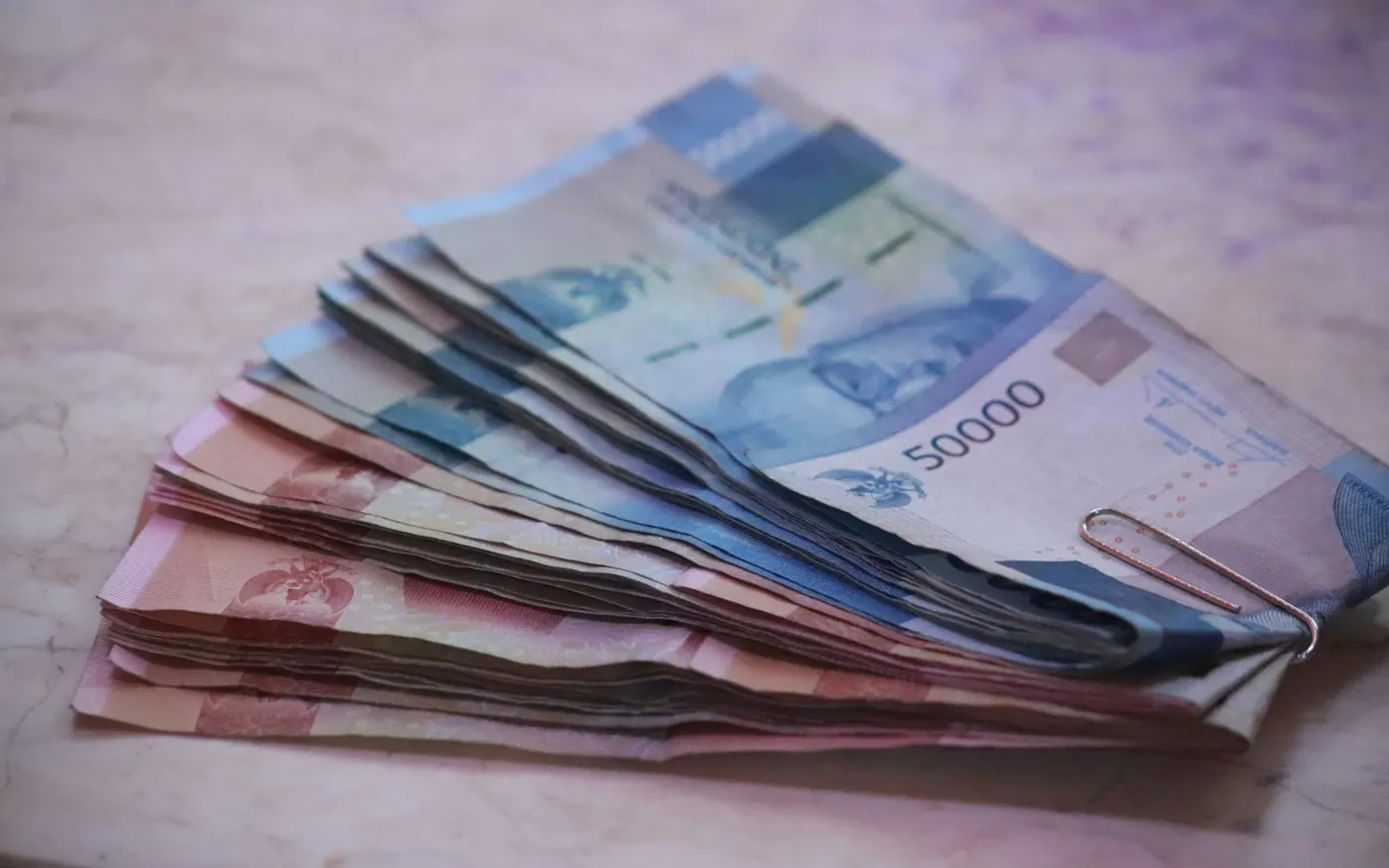
A smart cash plan is boring: one main card, one backup card, useful small notes, and no fantasy that QR payments work for every tourist everywhere.
Official notes checked
Bank Indonesia defines rupiah as Indonesia’s legal tender and manages rupiah circulation. Indonesia Travel notes that cards are common in major cities and tourist areas, but cash is still useful before remote destinations, smaller places and local-market spending.
Bank Indonesia defines QRIS as Indonesia’s national QR payment standard, including cross-border use with participating countries and payment apps. Indonesian customs guidance uses Rp100,000,000 as the reporting threshold for cash or other payment instruments carried into or out of Indonesia.
The practical takeaway is simple: use modern payments where they work, but keep rupiah cash for the gaps. That is not old-fashioned. That is just how travel works when your route leaves the mall.
How much cash should tourists carry?
Enough for a day or two of normal small spending, not a theatrical brick of money. In cities, that may mean enough for taxis, snacks, tips and backup. In rural areas or islands with fewer ATMs, carry more.
The exact amount depends on your route. Jakarta mall weekend? Card plus modest cash. Komodo boat, rural Java, remote waterfall day, small warungs? Bring cash and stop trying to make every coconut a card transaction.
For most first-time travelers, the useful answer is: carry enough rupiah for transport, snacks, tips, small tickets, toilets, parking, market purchases and one awkward surprise. Do not carry your whole trip budget in cash unless your route genuinely requires it. Indonesia has ATMs and card acceptance in major places. It also has tiny cash problems that appear exactly when you are tired.
Small notes matter. A wallet full of Rp100,000 notes can be annoying when you are paying for a small snack, a bathroom, parking or a short local ride. Break larger notes in supermarkets, convenience stores, malls or larger restaurants instead of making the smallest vendor solve your change problem.
Cash versus card versus QRIS
| Payment method | Works best for | Weak spot |
|---|---|---|
| Cash rupiah | Small vendors, transport gaps, rural areas | ATM planning and small change |
| Credit/debit card | Hotels, malls, larger restaurants | Surcharges, broken terminals, smaller merchants |
| QRIS | Local digital payments and some cross-border payment apps | Not every tourist can use it |
| Cash App / Cash App Pay | Not a local Indonesia payment method | Cash App Pay is currently listed by Cash App as US-only |
| Home-currency cash | Exchanging in cities | Bad rates in the wrong place, useless for direct payment |
Does Cash App work in Indonesia?
Do not treat Cash App as an Indonesia travel payment solution.
Cash App Pay is currently listed by Cash App as available only in the United States. Indonesia merchants use local cash, cards, bank transfers and QRIS-based payments, not Cash App Pay as a normal checkout method.
If you have a Cash App Card, that is a different question. Treat it like a foreign Visa debit card: it may work where foreign Visa cards are accepted, and it may fail where foreign cards are not accepted, your account blocks the transaction, an ATM rejects it or the merchant only takes cash or QRIS. That is not an Indonesia strategy. That is one backup card.
For tourists, the practical stack is simpler: Indonesian rupiah cash, one main card, one backup card, and QRIS through a working local wallet setup if you have actually funded it.
Where cards usually work
Cards are normal in hotels, larger restaurants, supermarkets, shopping malls, airline offices, established tour operators and many mid-range to higher-end businesses in Bali, Jakarta, Yogyakarta, Surabaya, Bandung, Lombok and other major destinations.
That does not mean every card works every time. Terminals fail. Foreign card security blocks happen. Some places add card minimums or surcharges. Some smaller guesthouses prefer bank transfer or cash. Some drivers and local guides may not take cards at all.
The point is not to distrust cards. The point is to stop treating one payment method as your whole personality.
Where cash still wins
Cash is still the easy answer for:
- Small warungs and food stalls.
- Traditional markets.
- Local parking and toilets.
- Some temple, beach and waterfall fees.
- Tips and small help payments.
- Rural routes and island transfers.
- Early morning or late night transport gaps.
- Places where card machines exist but are “not working” today.
That last phrase is not always a scam. Sometimes the machine really is down. Sometimes the connection is bad. Sometimes nobody wants to argue with the terminal. Pay cash and move on.
ATMs and money changers
Use ATMs attached to banks or inside serious buildings when possible. For the exact withdrawal routine, use the Best ATMs in Indonesia guide.
In tourist areas, authorized money changers are common, but rates and fees still matter. Do not get hypnotized by a board that says “no commission” if the exchange rate is doing the damage quietly.
If you are going to remote areas, withdraw before you leave the city. Do not make the village solve your card planning problem.
ATM planning is especially useful before ferry routes, volcano trips, rural homestays, small islands and long driver days. Major cities and tourist zones are usually fine. A small island with one unreliable ATM is a different story.
When withdrawing, watch for dynamic currency conversion prompts. If an ATM or terminal offers to charge you in your home currency, that can mean a worse exchange rate. In many cases, paying or withdrawing in rupiah and letting your own bank handle conversion is better. This depends on your card, but the lazy “accept whatever the screen says” method is not a strategy.
How much cash by trip style
| Trip style | Cash approach | Why |
|---|---|---|
| Jakarta business or mall-heavy trip | Modest cash plus cards | Cards work often, but small cash still helps |
| Bali first-time trip | Daily cash buffer | Drivers, tips, small warungs, beach/temple fees |
| Java culture route | Cash plus card | Markets, trains, food stalls, entrances and local transport |
| Lombok/Gili/Komodo route | More cash planning | Boats, islands and smaller operators can be less card-friendly |
| Remote/rural travel | Withdraw before leaving cities | ATM access can be unreliable or limited |
How much should you withdraw?
There is no one perfect number, because a backpacker eating at warungs and a family booking private drivers do not burn cash at the same speed. The sensible method is to think in days, not drama.
For city travel, keep enough rupiah for the next day or two of small spending. For remote routes, ferry connections, early departures or island stays, withdraw more before leaving a major town. For hotel-heavy trips, cards can carry more of the load, but small cash still solves tips, taxis, snacks and places that do not want card friction.
Do not withdraw your whole trip budget on day one unless you have a real reason. Losing a card is annoying. Losing a large stack of cash is worse.
Small notes are not optional
Indonesia uses large-looking numbers, and tourists sometimes panic because the notes feel big. Relax. The practical issue is not the number of zeros. It is whether you can pay cleanly.
Keep smaller notes for small purchases. Drivers, market sellers, toilet attendants, parking attendants and food stalls may not love breaking large notes for tiny payments. This is not a grand cultural insight. It is just basic cash etiquette.
If you only have large notes, break them at convenience stores, supermarkets, cafes, malls or bigger restaurants. Do that before you need small change, not while a queue waits behind you.
Can you use US dollars in Indonesia?
Do not plan to pay directly with US dollars, euros, Australian dollars or other foreign cash for normal daily purchases. Indonesia runs on rupiah.
Foreign cash can be useful for exchange, especially if the notes are clean and common currencies such as USD, EUR, AUD or SGD. But paying a driver, warung, toilet attendant, market seller or small hotel in foreign cash is not a normal plan. It creates exchange-rate arguments and change problems for no good reason.
The clean approach is boring: exchange or withdraw rupiah, keep small notes and use cards where cards are normal.
Bringing large amounts of cash into Indonesia
Normal tourist cash is one thing. Large cash is customs territory.
Indonesia’s electronic customs declaration says travelers carrying cash or other payment instruments in rupiah or foreign currency worth Rp100,000,000 or more must report it to Customs officers. Bea Cukai also publishes the same threshold in its cash-carrying FAQ.
Most tourists do not need to carry anywhere near that amount. If you are close to the threshold, check the current customs form before travel and declare properly. Do not carry a huge stack of foreign cash just because you want to avoid one ATM fee. That is not clever. That is turning a small bank-cost problem into an airport-admin problem.
Airport arrival cash
Arriving with a little rupiah already sorted can be useful, but you do not need to overdo it. Airport ATMs and money exchange can solve the first step in many major arrivals, but rates, fees and queues are still part of the trade-off.
The practical move is simple: have enough for your first transport backup, water, snacks and the first small expenses. If you have pre-booked transport and a working card, you can withdraw more later at a calmer bank ATM. If you are arriving late, with kids, or heading straight to somewhere less central, get cash earlier and stop pretending future-you wants another task.
Cash safety
Split cash between a wallet and a backup spot. Do not flash a thick stack in markets or at ATMs. Count money discreetly. Use ATMs in bank branches, malls or supervised places when possible, especially at night.
This is basic travel hygiene, not paranoia.
What to verify before travel
- Current official currency denominations.
- Current ATM access notes for major tourist regions.
- Common foreign card acceptance in target cities.
- Whether QRIS cross-border availability has expanded.
- Current customs cash declaration threshold if you carry large amounts.
- Whether any wallet or card you plan to use actually works in Indonesia.
- Any current card surcharge norms or local payment restrictions.
My take
Carry cash. Use cards where they make sense. Try QRIS only if your payment app is actually supported. That is the whole system.
The traveler with one card, no cash, no eSIM and a very strong opinion about modern payments is not efficient. They are one declined transaction away from creating a delay that was easy to avoid.
Common mistakes
- Arriving with only a metal travel card and optimism.
- Assuming Cash App works like a local Indonesia wallet.
- Withdrawing only large notes, then trying to pay a tiny vendor.
- Exchanging money at a suspiciously generous booth.
- Assuming QRIS is automatically available to all foreign visitors.
- Carrying a large amount of foreign cash without checking customs declaration rules.
- Forgetting cash before a boat, temple, rural day trip or early-morning route.
FAQ
Can I use USD, EUR or AUD directly?
Do not plan on it. Exchange or withdraw Indonesian rupiah. Foreign cash is for money changers, not for normal daily payments.
Are cards widely accepted?
In major hotels, malls and larger restaurants, yes. In smaller places and rural areas, carry cash.
Do I need cash in Bali, Indonesia?
Yes. Bali is card-friendly in many tourist areas, but cash still helps for drivers, tips, warungs, parking, beach or temple fees, toilets, small shops and backup when an app, terminal or foreign card fails.
Should I carry cash or card in Indonesia?
Carry both. Use cards in hotels, malls, larger restaurants and established businesses. Use cash for small payments, rural stops, markets, transport gaps and backup.
How much cash should I carry per day in Indonesia?
There is no single perfect amount. For city days, carry enough rupiah for small purchases, taxis, tips and backup, then use cards where they are normal.
For rural routes, islands, early departures, day trips with drivers or small-market plans, carry more and withdraw before leaving major towns. The point is not to carry your whole trip budget. The point is to avoid needing an ATM exactly where there is no useful ATM.
Does Cash App work in Indonesia?
Cash App Pay is currently listed by Cash App as available only in the United States, so do not treat it as a local Indonesia payment method. A Cash App Card, if you have one, is just a foreign Visa debit card for travel purposes.
Do I need to declare cash when entering Indonesia?
If you carry cash or other payment instruments worth Rp100,000,000 or more, Indonesia’s customs declaration guidance says you must report it to Customs officers. Normal tourist cash is usually far below this, but check the current customs form if you are carrying a large amount.
Is QRIS a replacement for cash for tourists?
Not yet for every tourist. It depends on your payment app, country and whether the merchant/payment flow supports tourist use. See the QRIS guide for tourists.
Related guides
Sources for changing details
Routes, fares, opening hours, app rules, weather, safety guidance, official portals and local operating details can change. Use these pages before relying on exact practical details.

I'm the person behind Simply Indonesia. I lived in Yogyakarta and Bali for more than five years, which is long enough to know that Indonesia is amazing, messy, generous, occasionally confusing and very bad at fitting into generic travel-blog advice.
I'm also a manual-brew coffee nerd, dangerously loyal to sate klathak, and far too interested in the small practical details that decide whether a trip feels smooth or stupidly annoying.
I write these guides for travelers who want the useful version: how to get out of the airport, where to stay, what food actually tastes like, when paying extra is normal, and when something really deserves a hard no.
No fake hidden gems. No "paradise awaits" nonsense. No panic about every 50k IDR price difference.