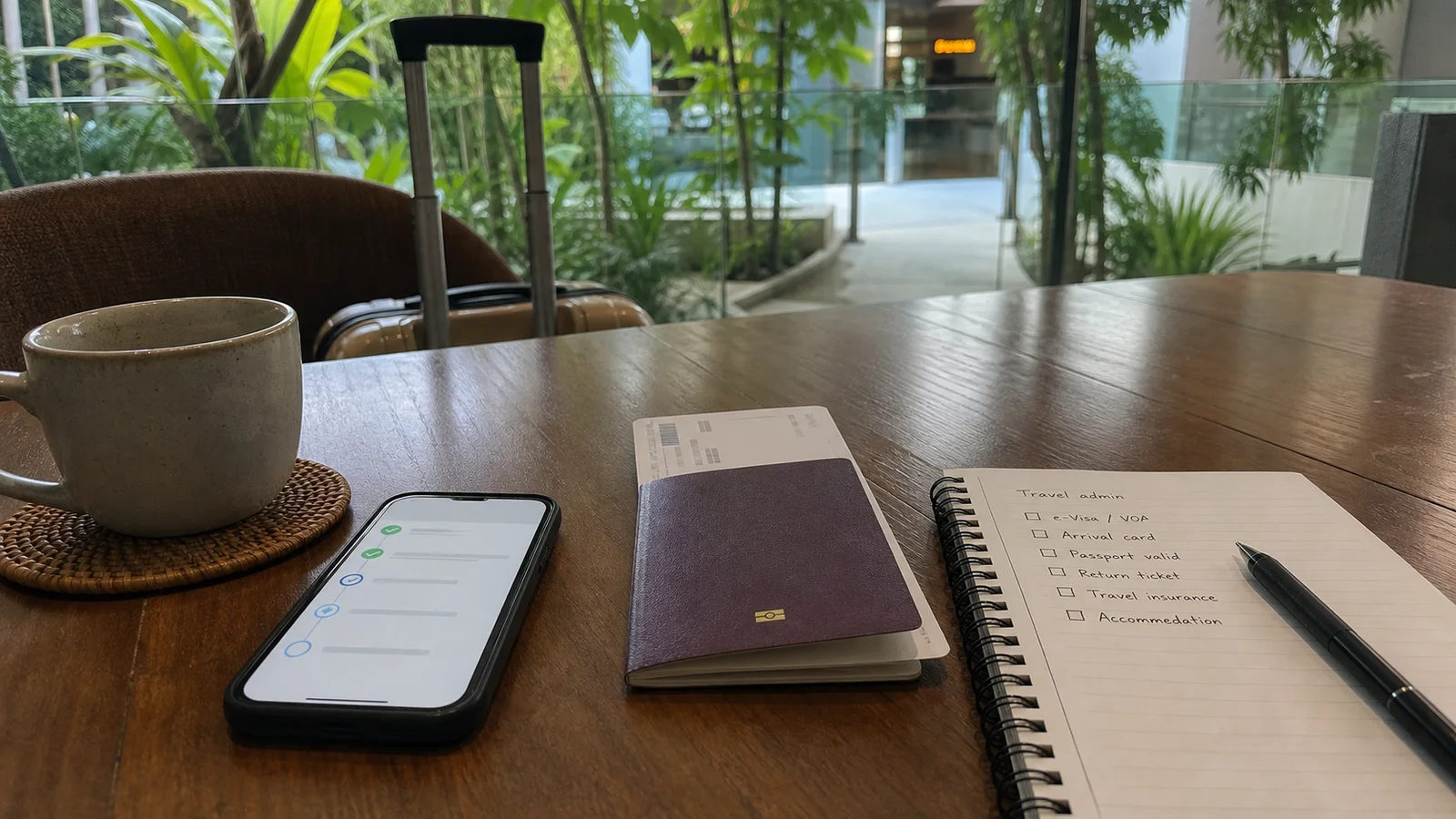
Do you need a visa for Bali?
Maybe. Bali does not have its own tourist visa; it uses Indonesia’s immigration rules. Whether you need a visa depends on your passport nationality, passport type, travel purpose and planned stay length.
For many short tourist trips, the first route to check is Indonesia’s B1 visa on arrival / e-VOA. Some passport holders may qualify for A1 visa exemption. Longer stays, work, paid activity, repeated entries, study, residence or sponsored stays belong in a different decision path.
Visa, All Indonesia arrival card and Bali tourist levy are three separate jobs. Your visa decides whether your stay route fits. The arrival card is a pre-arrival declaration for Indonesia. The Bali tourist levy is a Bali provincial payment. Use this page for the Bali-specific workflow and the Indonesia Visa Guide for the broader national route comparison.
Checked against official sources: May 15, 2026. Use this as a workflow, not legal advice. The stay-length numbers below are fixed planning facts from official Immigration pages checked on that date; your passport, purpose and eligibility still need to match the route.
30-second Bali visa check
Which Bali visa route should you check first?
This is not an eligibility guarantee. It is the practical starting point before you use the official Immigration pages.
Key limits: B1/e-VOA is 30 + 30 days · C1 uses 60-day blocks up to 180 days · A1 is 30 days only and not extendable.
Check passport eligibility first. A1 is only useful if your passport and purpose fit.
B1 can reach 60 days only with its single extension. Do the date math before flying.
C1 starts with 60 days and can extend in 60-day blocks up to 180 days total.
Do not force a tourist route to cover a trip that is not actually a tourist stay.
Official starting points
Use official links before agency summaries.
Search ads and lookalike domains are where Bali visa panic gets expensive. Start with these official pages, then use this guide to keep the Bali workflow in order.
Common Bali plans
I am staying X days. What should I check?
Check B1/e-VOA eligibility or A1 if your passport and purpose qualify. Still handle the arrival card and Bali levy separately.
Do not treat 45 days like a normal 30-day holiday. Plan B1 extension timing or compare C1 before you book around the dates.
B1 is not enough. Compare C1 or another official visitor route before arrival instead of hoping an extension solves it later.
Use the official portal first, save proof offline, prepare a VOA-at-arrival backup only if your passport and purpose qualify.
Before you fly
Save these offline before Bali arrival.
The goal is simple: reach DPS with every separate admin task already understood and every proof available without airport Wi-Fi.
- Passport that matches every application and booking detail.
- Visa, e-VOA approval or visa-exemption proof if applicable.
- All Indonesia arrival card confirmation.
- Bali tourist levy voucher if paid before travel.
- Return or onward ticket.
- First Bali hotel, villa or stay address.
- Offline screenshots or PDFs of all entry documents.
- Working eSIM, roaming or data plan.
- Airport transport plan for after immigration and baggage.
That is why this page stays Bali-focused. The visa rules are national; the traveler friction usually happens in the Bali arrival workflow.
Bali entry admin workflow
Current snapshot
Use this as the Bali arrival workflow. The stay math is not a mystery: B1 is 30 + 30 days, A1 is 30 days only, and C1 is 60 + 60-day blocks up to 180 days total when the route fits.
| Bali entry job | What it does | Where to go deeper |
|---|---|---|
| Visa route | Confirms whether your passport and trip fit B1 / e-VOA, VOA at arrival, A1 exemption, C1 or another route | B1 is 30 + 30 days, A1 is 30 days only, C1 is 60 + 60-day blocks up to 180. Use the Indonesia Visa Guide for the national comparison. |
| Bali e-VOA or VOA decision | Decides whether you handle the short-stay visa admin before flying or after landing | Visa on Arrival Indonesia |
| All Indonesia arrival card | Separate pre-arrival declaration for Indonesia | Indonesia Arrival Card Guide |
| Bali tourist levy | Separate Bali provincial tourist payment, not a visa | Bali Tourist Levy Guide |
| DPS arrival proof | Offline copies of visa, arrival card, levy voucher, onward ticket and first-stay address | This page |
The useful order is simple: choose the visa route first, then handle the arrival card, then check the Bali tourist levy, then save all proof offline.
What to check before you apply
Start with the official Indonesian eVisa portal and the Immigration visa pages, not agency summaries. Then check the Bali tourist levy separately on Love Bali. If you are comparing national visa routes in depth, use the Indonesia Visa Guide and then come back here for the Bali arrival checklist.
Before you rely on any visa advice, confirm your passport nationality, the visa route name, permitted purpose, payment method, arrival-card requirement and onward-ticket wording. For stay-length planning checked on May 15, 2026: B1 is 30 days plus one 30-day extension, A1 is 30 days with no extension, and C1 is 60 days plus 60-day extension blocks up to 180 days total. This is the part where official sources should do the heavy lifting.
Official Bali visa website and agency links
The official starting point for online visa applications is evisa.imigrasi.go.id. The official Immigration information pages live on imigrasi.go.id.
There is no separate official “Bali visa” website for tourist visas. If a website makes it look like Bali runs its own visa system, slow down and check the domain. Bali-specific admin does exist for the tourist levy, but the visa itself is Indonesia Immigration.
Agents can be useful for complicated cases, sponsored visas, long stays or people who do not want to handle admin themselves. But an agent is not magic. If an agency page contradicts Indonesian Immigration, trust Immigration first. If a site looks official but has a strange domain, aggressive urgency and vague fees, slow down.
For a simple holiday, check the official route before paying anyone extra. You may still choose an agent, but choose one knowingly, not because a search ad looked government-ish after a long day.
B1 vs C1 vs A1 for Bali trips: short version
Visa names change, old names linger online, and travel forums are excellent at keeping outdated vocabulary alive. For most normal Bali travelers, the first comparison is not every visa in Indonesia. It is whether your trip fits B1, C1, A1 or something more specialized.
Here is the Bali-level version:
| If your Bali plan looks like this | Start by checking | Why |
|---|---|---|
| Short holiday, normal tourism, eligible passport | B1 visa on arrival / Bali e-VOA | 30 days first stay, one 30-day extension, 60 days total. |
| Passport may qualify for visa-free entry | A1 visa exemption | 30 days only and not extendable; bad fit for a 31-day Bali plan. |
| First stay is longer, or the normal VOA window may not fit | C1 visitor visa or another official route | 60 days first stay, then 60-day extension blocks up to 180 days total when the route fits. |
| Work, paid services, residence, study, repeated entry or sponsored stay | Official visa menu or professional advice | A Bali holiday page should not freestyle legal advice. |
For the full national route comparison, fees, documents, country-list logic and extension rules, use the Indonesia Visa Guide. This Bali page is for the arrival workflow once your trip points to Bali.
Do not choose a visa because the code sounds familiar. Choose it because your passport, purpose, stay length, documents and extension plan actually fit.
Which Bali visa route should most tourists check first?
Start with the trip you are actually taking, not the visa name you saw online.
If you are visiting Bali for a short holiday, not working, not selling services and not filming commercially, check whether your passport is eligible for Indonesia’s tourist visa on arrival route. The official B1 tourist visa on arrival page is the place to verify eligible countries, permitted purposes, fee, stay length and extension rules.
If your passport is from a country covered by Indonesia’s visa exemption route, check the official A1 page instead. Do not assume this applies because you heard “ASEAN is visa-free.”
If you want to stay longer, enter multiple times, work, be paid, study, join family, or convert into another stay arrangement, stop trying to squeeze the trip into VOA because it sounds easy. Easy is good, but the route still needs to fit.
Bali visa on arrival and e-VOA basics
For Bali VOA/e-VOA planning, use the fixed B1 numbers: 30 days from arrival, one 30-day extension, 60 days total, Rp 500,000 visa fee.
B1 gives up to 30 days from arrival and can be extended once to 60 days total. If your Bali stay is 31-60 days, B1/e-VOA can still fit only if you plan the extension. If your Bali stay is over 60 days, compare C1 before arrival instead of pretending a short-stay route will stretch.
The practical difference between Bali VOA and Bali e-VOA is where you handle the admin. The visa route is Indonesian, but the friction happens when you land tired at DPS, stand in the wrong queue or realize your payment/card plan was wishful thinking.
If you are eligible and the official online flow works, Bali e-VOA is usually the cleaner arrival plan because you handle the visa admin before flying. The catch is that every passport field, upload and payment step needs to be correct before you arrive.
Visa on arrival at DPS can still be the practical fallback for eligible travelers who did not complete e-VOA before departure, but it moves the admin into the airport arrival sequence. That means more queue, payment and tired-after-flight friction. It is not the moment to discover your passport was never eligible.
Visa exemption, C1 and other routes are national visa decisions, not Bali-specific hacks. Use them only if the official route matches your passport, purpose and stay length.
For exact B1 / e-VOA requirements, read the Visa on Arrival Indonesia guide. For Bali, the practical rule is simpler: do not land with your only visa proof stuck in an email you cannot access without airport Wi-Fi.
Bali visa cost, documents and payment problems
Do not use this Bali page as the master fee table, but the baseline route facts are clear: B1 is Rp 500,000 for 30 days and one 30-day extension can bring it to 60 days total; C1 is Rp 1,000,000 for a 60-day first stay and can extend in 60-day blocks up to 180 days total; A1 is Rp 0 for 30 days and not extendable. For the current national breakdown, use the Indonesia Visa Guide and the official visa pages.
For Bali planning, the useful checks are more practical:
- Can you complete e-VOA payment before flying, or do you need a VOA-at-arrival backup?
- Does your card allow international online payments?
- Can you access the email address used for the visa while traveling?
- Do your passport name, passport number, nationality and dates match exactly?
- Do you have an onward or return ticket ready if asked?
- Have you saved your visa proof offline before landing at DPS?
If the eVisa site is not working, payment fails, or the status gets stuck, do not immediately hand your passport data to a mystery helper. First: check the official site, retry later, confirm your card allows international online payments, save any invoice or payment reference, and use official account or status tools. If your trip depends on fast approval, give yourself time instead of applying at the last possible moment.
Payment problem
If the eVisa payment fails
- Stay on the official portal and do not jump to a lookalike agency site.
- Retry later, especially if the portal is slow or timing out.
- Try another card or browser if your bank blocks international online payment.
- Save any invoice, payment reference or account status screen.
- Give yourself enough time so a payment issue does not become a flight-day problem.
US, UK, Australian, Indian and other passports
Most nationality-specific searches are really asking the same thing: “Does my passport qualify for Bali visa on arrival or e-VOA, what does it cost, and can I do it online?”
Use passport nationality as the official eligibility check, not your residence, airline, ethnicity or departure airport. A U.S. citizen living in Dubai, an Australian passport holder flying from Singapore, and an Indian passport holder departing from Malaysia should all check the passport nationality against Indonesian Immigration’s current visa list.
Do not rely on a static country table here. Country lists can change, and passport type can matter. Use the Indonesia Visa Guide for the broader passport logic, then use this Bali guide for the arrival-card, tourist-levy and DPS workflow.
Airlines like Jetstar, Qantas, Virgin Australia or Air New Zealand may remind you about visa requirements. Useful, yes. Final authority, no. Airline check-in staff can deny boarding if documents look wrong, but Immigration still controls entry.
Passport check
US, UK, Australia, India, Germany and other passports
Check eligibility by passport nationality on official Immigration pages, not by residence, airline, departure airport or an old country list. Use the Indonesia Visa Guide for broader passport logic, then come back here for the Bali arrival workflow.
When to apply and how long it takes
For Bali e-VOA, do not leave it until the airport car is outside. If the official system is slow, your payment fails, your upload is rejected or your status sits in limbo, the problem becomes much less charming once your DPS flight is already boarding.
If your e-VOA is still pending close to departure, check whether you are eligible for visa on arrival at DPS as a backup instead of assuming the airport will solve everything for you. That backup only helps if your passport, purpose and arrival point actually qualify.
Simple rule: apply early enough that a payment issue, upload problem, typo, status delay or support response does not become a flight-day problem. If you are using VOA at arrival, be ready for the airport admin and queue. If you are applying for a longer visitor route, start earlier and use the national visa guide.
Also check your travel date against Bali-specific disruption risk. Nyepi, major holidays, peak arrivals, late-night landings and tight onward connections are bad times to discover that your visa plan depends on luck.
What happens at Bali airport after you land
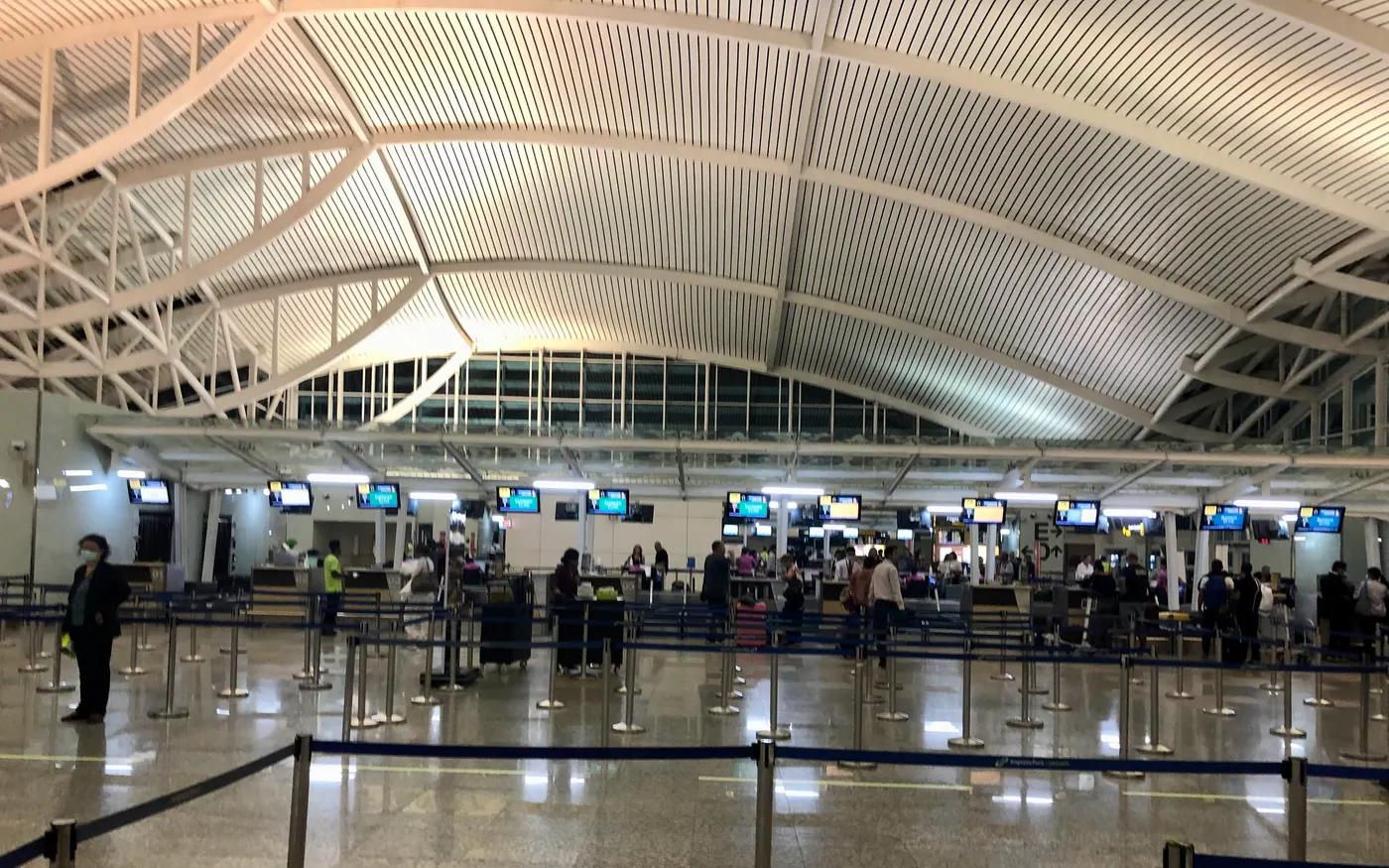
At Bali’s main international airport, I Gusti Ngurah Rai International Airport / DPS, the exact flow can vary by passport, visa route, queue setup and current airport instructions. Do not build the plan around one old arrival screenshot.
The useful preparation is simple: know what you already have, know what you still need, and keep proof available without mobile data.
.jpg)
- If you have e-VOA, keep the approval available offline. It can reduce visa-counter friction, but it does not replace immigration inspection.
- If you plan to use VOA at arrival, make sure your passport and purpose are eligible before boarding, then expect payment/admin friction after landing.
- Keep the All Indonesia arrival card confirmation accessible.
- Keep the Bali tourist levy voucher accessible if you paid before travel.
- Keep your first Bali stay address, onward ticket and passport details ready.
- Do not rely on airport Wi-Fi for the only copy of anything important.
Follow current airport signs and staff instructions instead of trying to force a fixed counter sequence from an old blog post. If you already handled e-VOA, your job is to present the right proof. If you still need VOA at arrival, your job is to follow the current payment/admin flow before immigration inspection. If you are visa-exempt, your job is to make sure that route actually applies to your passport and stay.
After immigration, you still have baggage, customs/declaration flow, transport pickup and the normal Bali airport problem: everyone is tired and every small delay feels personal. Boring preparation is the whole trick.
Use the Bali Airport Grab and Gojek Guide after the entry-admin part is handled, so transport does not become the next stressful decision.
All Indonesia arrival card: separate from the visa
The All Indonesia arrival card is not your visa. It is a separate declaration process. The official eVisa portal may show arrival-card requirements and link to the current official declaration flow, with timing rules before arrival.
After your visa route is sorted, submit the arrival card through the official flow during the allowed window, then save the confirmation. Do not leave it for the airplane seat pocket panic session.
If the official system changes from a separate card to a broader declaration flow, update your workflow. The principle stays the same: visa permission, arrival declaration and Bali levy are separate jobs.
If you want to stay longer in Bali
If you already know before arrival that Bali might become a longer stay, do not treat extension as a small future task. Check the visa route before booking flights, accommodation and coworking plans around a stay length that may not fit.
For a B1 visa on arrival / e-VOA plan, read the How to Extend Visa on Arrival Indonesia guide before you fly. B1 can cover 31-60 days only with its single 30-day extension. If you already know the Bali stay is 61-120 days, compare C1 because one 60-day C1 extension can cover that range. If the stay is 121-180 days, you are planning around two 60-day C1 extensions. Over 180 days is not a normal C1 plan.
In Bali, the real-life issue is timing. Ubud, Canggu, Seminyak, Sanur, Uluwatu and the islands do not all feel equally close to immigration admin when you suddenly need to fix paperwork. Start early. Keep your passport, visa proof, stay address and travel dates organized. Do not wait until the final days because “someone said an agent can do it.”
If your Bali plan is close to the 30-day line, use the Indonesia Visa Stay Checker before treating the dates as harmless. Arrival day counts as day 1, and a villa discount is not a visa strategy.
Visa agents exist all over tourist Bali. Some can be useful for admin-heavy cases. That does not mean they can change your legal eligibility, erase overstays, guarantee approvals or make unofficial rules official. Ask exactly what they do, what fee they charge, whether you still need to appear at Immigration, what documents they need and what happens if timing slips.
Common Bali visa mistakes
Most Bali visa mistakes are not exotic. They are ordinary admin problems made worse by long flights, weak phone signal, last-minute planning and the assumption that Bali somehow has a softer version of Indonesian immigration rules.
Here is the real trade-off: if you already know you want more than the ordinary short-stay window, compare the correct visa routes before arrival. Do not build a longer Bali stay around a half-understood extension plan.
Common mistakes to avoid:
- Assuming every passport gets Bali visa on arrival.
- Treating the Bali tourist levy QR code like a visa.
- Treating the All Indonesia arrival card like e-VOA.
- Booking a Bali stay longer than the visa route allows because the villa discount looked good.
- Saving e-VOA proof only inside an email account that needs data you do not have yet.
- Using an unofficial lookalike site because it ranked high in search.
- Entering passport details with typos and hoping airport staff can fix it at the counter.
- Starting a Bali visa extension too late because Canggu/Ubud/Seminyak agent chatter made it sound casual.
- Treating an issued e-VOA as a guaranteed right to enter. Immigration still makes the entry decision.
- Forgetting that children and infants may need their own visa/admin records.
Bali tourist levy is separate
The Bali tourist levy is a Bali provincial payment for international tourists. It is not a visa fee, not the arrival card and not proof that you may stay in Indonesia.
The official Love Bali FAQ lists the foreign tourist levy as Rp 150,000 per person and says international tourists are strongly encouraged to pay online before departure to Bali. It also lists exemptions, payment methods and QR voucher proof. Recheck all of that because levy rules can change.
For the full workflow, use the Bali Tourist Levy Guide. Short version: handle your Indonesia visa first, submit the arrival card in the official window, then deal with the Bali levy if the current rules apply to you.
FAQ
Basic visa questions
Is the Bali visa different from an Indonesia visa?
No. Bali uses Indonesia visa rules. The Bali tourist levy is separate because it is a Bali provincial tourist payment, not an immigration visa.
Should I use e-VOA or pay VOA at the airport?
If you are eligible and the official online flow works for you, e-VOA can reduce arrival friction. If you prefer to process at arrival, check whether your passport and entry point support VOA and prepare for more queue/payment admin.
Does e-VOA guarantee entry to Bali?
No. The official eVisa information checked for this guide says issuance of a visitor visa does not guarantee entry; the entry decision remains with the immigration officer at the port of entry.
What is the official Bali visa website?
Bali does not have its own visa website. Use Indonesia’s official eVisa portal at evisa.imigrasi.go.id and Immigration information at imigrasi.go.id.
Route and stay length
How long can tourists stay with VOA?
Bali uses Indonesia’s B1 visa on arrival / e-VOA rules: 30 days first stay, one 30-day extension, 60 days total. If your Bali trip might push the limit, read the extension guide before you fly.
Can I extend my VOA in Bali?
For eligible B1 / e-VOA travelers, the stay can be extended once by 30 days, up to 60 days total. Read the VOA extension guide early. Do not wait until your final Bali week.
What is the difference between B1 and C1 for Bali?
B1 is the common visa-on-arrival / e-VOA route many short Bali visitors check first: 30 days first stay, one 30-day extension, 60 days total. C1 is a different visitor route with 60 days first stay and 60-day extension blocks up to 180 days total. For documents, fees and route fit, use the Indonesia Visa Guide.
Do US, UK, Australian or Indian citizens need a visa for Bali?
Check by passport nationality on the official Indonesian Immigration site. Do not rely on residence, airline, departure airport or an old country list. Use the national visa guide for passport eligibility, then use this Bali guide for the arrival-card, tourist-levy and DPS workflow.
Is the arrival card the same as the Bali tourist levy?
No. The arrival card is an Indonesia arrival declaration process. The Bali tourist levy is a separate Bali payment if the current levy rules apply to you.
Costs and problems
How much does a Bali visa cost?
The fee depends on the official visa route, and Bali does not set a separate tourist visa fee. B1 is Rp 500,000, C1 is Rp 1,000,000 and A1 is Rp 0 based on official pages checked for this guide. The Bali tourist levy is a separate Bali payment, not a visa fee.
What documents do I need for a Bali visa?
It depends on the visa route. For Bali planning, make sure your passport details, email access, payment method, onward or return ticket, first-stay address and offline screenshots are ready. For route-specific document lists, use the official visa page or the Indonesia Visa Guide.
What if the Bali eVisa payment fails?
Stay on the official portal, retry later, check your card permissions, save any invoice or reference, and use official account or status tools. Do not panic into a random third-party site just because the official payment page is annoying.
When should I apply for a Bali visa?
Early enough that payment, upload, approval or typo problems do not become airport-day problems. e-VOA can reduce arrival friction, but it is still admin. Treat it like admin.
Official sources for changing visa details
Visa routes, fees, eligibility, arrival-card rules and Bali levy details can change. Use these official pages before you build a trip around exact stay lengths, prices or entry requirements.

I'm the person behind Simply Indonesia. I lived in Yogyakarta and Bali for more than five years, which is long enough to know that Indonesia is amazing, messy, generous, occasionally confusing and very bad at fitting into generic travel-blog advice.
I'm also a manual-brew coffee nerd, dangerously loyal to sate klathak, and far too interested in the small practical details that decide whether a trip feels smooth or stupidly annoying.
I write these guides for travelers who want the useful version: how to get out of the airport, where to stay, what food actually tastes like, when paying extra is normal, and when something really deserves a hard no.
No fake hidden gems. No "paradise awaits" nonsense. No panic about every 50k IDR price difference.