Short answer
Bali food is better when you stop trying to rank every meal and start ordering like a normal person. Get nasi campur when you want an easy first plate. Try babi guling if you eat pork. Ask about lawar before you order it, because versions vary. Use tourist restaurants when you want air conditioning, cocktails, familiar breakfasts or a cleaner family setup.
None of this needs drama. A warung can be great value. A beach-club lunch can be overpriced but convenient. A plant-based cafe can be genuinely useful. A local pork dish can be excellent and still completely wrong for halal travelers. The adult move is to know what you are buying.
First five Bali orders
If this is your first Bali food day, do not start with the most complicated option.
| Order | Why it works | Watch for |
|---|---|---|
| Nasi campur | Easiest first local plate; you taste several sides | Pork, spice and sambal vary by place |
| Sate lilit or satay | Familiar enough without being boring | Meat or fish type can change |
| Ayam or bebek betutu | Strong Balinese spice profile | Can be spicy and heavy |
| Babi guling | Famous Balinese pork dish | Not halal; best only if you eat pork |
| Pisang goreng, klepon or a bakery stop | Simple snack/dessert layer | Sweetness, freshness and hygiene still matter |
Add lawar after you understand what version you are ordering. It can be excellent, but it is not the dish to order blindly if pork, blood, spice or texture matters to you.
Balinese dishes to know
Bali is famous for food that reflects the island’s Hindu majority, local spice bases, pork dishes, rice meals, coconut-heavy sides and ceremonial cooking. That does not mean every meal is ceremonial or deep. Sometimes lunch is just rice, chicken, vegetables and sambal on a plate, which is honestly enough.
This is a Bali-wide food guide, not a cross-island lunch assignment. Use this list to recognize dishes, order smarter and save named-place hunting for area-specific guides.
Bali food shortlist
| Dish | What it is | Best for | Watch for |
|---|---|---|---|
| Nasi campur Bali | Rice with several side dishes | Easiest first local meal | Side dishes decide pork, spice and halal status |
| Babi guling | Balinese roast suckling pig | Pork eaters | Not halal; rich, fatty and usually spicy |
| Lawar | Vegetables, coconut, spices and often meat | Curious eaters | Some versions use pork or blood |
| Sate lilit | Minced fish, chicken or meat wrapped around a stick | Easy starter dish | Meat or fish type changes by kitchen |
| Ayam or bebek betutu | Spiced chicken or duck | Slow-cooked local flavor | Can be spicy, heavy and not quick |
| Sambal matah | Raw shallot, chili and lemongrass relish | Bright, sharp flavor | Not gentle if you dislike raw chili |
| Nasi jinggo | Small banana-leaf rice packet with sides | Cheap snack or light meal | Small portion; contents vary |
| Tipat cantok | Rice cake and vegetables with peanut sauce | Vegetarian-friendly starting point | Sauce may be spicy; ask about shrimp paste |
| Gado-gado | Vegetables, egg/tofu/tempeh and peanut sauce | Softer Indonesian meal | Not uniquely Balinese, but useful |
| Ikan bakar | Grilled fish | Beach or seafood meal | Check freshness and final price |
| Pepes ikan | Fish steamed in banana leaf with spices | Lighter local fish option | Bones and spice level vary |
| Mie goreng or nasi goreng | Fried noodles or fried rice | Low-drama backup meal | Basic, not the whole food story |
| Pisang goreng or klepon | Fried banana or sweet rice-cake snack | Dessert or snack | Sweetness and freshness matter |
| Kopi Bali | Balinese coffee | Coffee break or souvenir context | Strong, gritty or sweet depending on style |
This is where tourists overcorrect. They eat one smoothie bowl in Canggu, decide Bali has no local food, then eat one spicy lawar plate and decide every local dish is too intense. Both takes are lazy.
What the main dishes actually mean
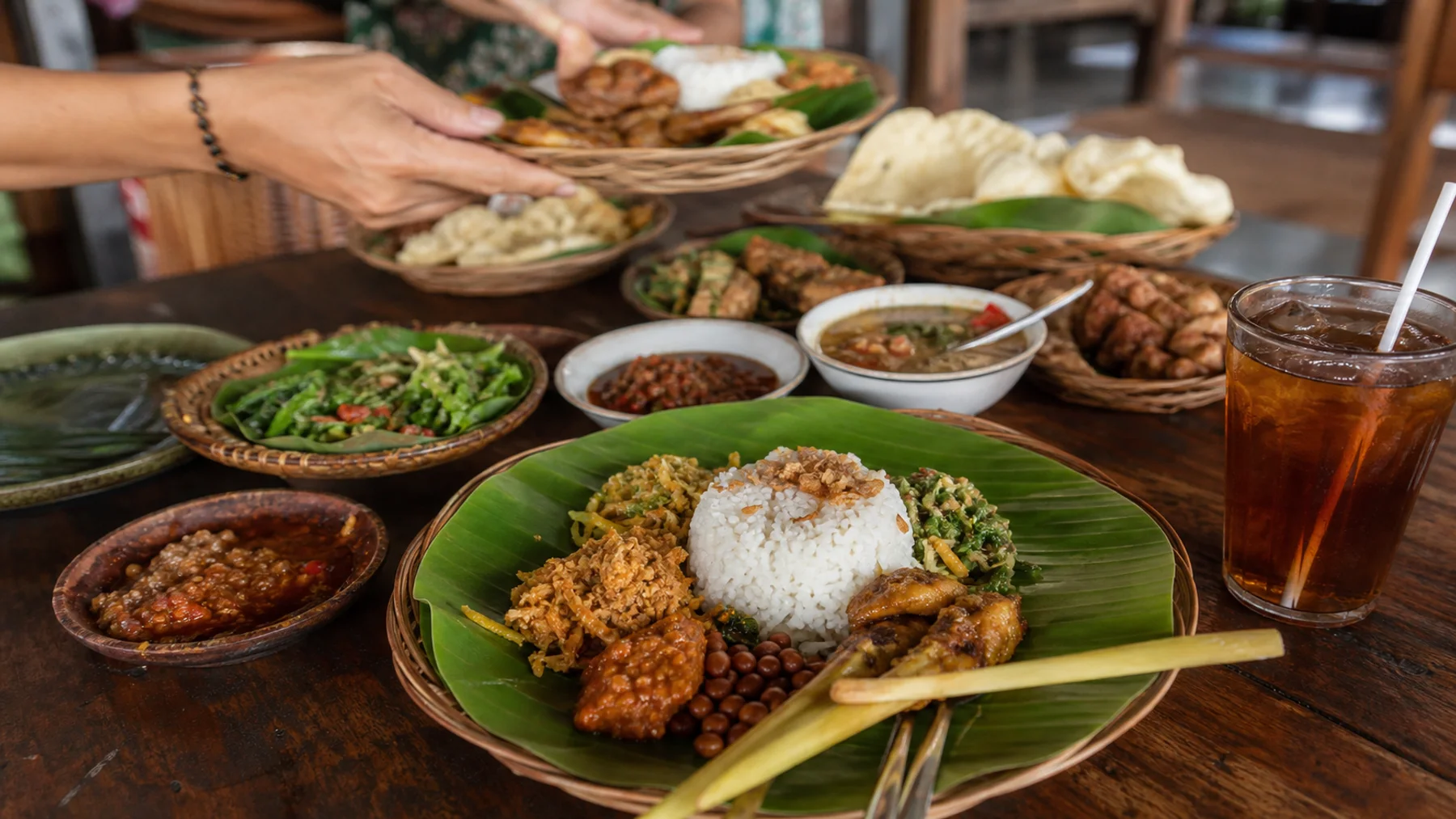
Nasi campur is the best starting point because it gives you a little of everything without forcing a big commitment. You usually get rice plus several sides: shredded chicken, vegetables, tempeh, egg, sambal, peanuts, fried bits, lawar, satay or pork depending on the stall. It is not one fixed recipe. That is the point.
Babi guling is the famous pork dish. Indonesia Travel describes babi guling as suckling pig roasted whole and served with rice, vegetables, condiments and spicy sides. The dish is rich, salty, fatty, crisp in places, soft in others and usually not subtle. If you eat pork, it is worth trying. If you do not eat pork, skip it without needing a speech.
Lawar is trickier because travelers often hear the name without knowing what they are getting. Indonesia Travel describes lawar as a Balinese mixture involving vegetables, grated coconut, minced meat and spices, with versions that can include blood. Some lawar is pork-based, some chicken or duck, some seafood, and some versions are made without blood. Ask first.
Sate lilit is an easier introduction. It is minced fish, chicken, pork or other meat mixed with spices and wrapped around a stick or lemongrass stalk before grilling. It is often mild enough for cautious eaters, though sambal on the side can change that quickly.
Betutu is spiced chicken or duck. It can be excellent when cooked well, but it is not always a quick lunch. If a place is known for betutu, fine. If a random tourist menu lists it beside burgers and nachos, manage expectations.
First food day in Bali: simple order sequence
Use this sequence after the dish table if you want a low-drama first food day.
- Start with nasi campur from a busy warung. You can see the format, taste several sides and learn what you like.
- Try sate lilit, simple satay, grilled fish, nasi goreng or mie goreng when you want something familiar enough.
- If you eat pork, try babi guling at a place with high turnover. Order the plate, not a perfect fantasy.
- Try lawar only when you are ready to ask what version it is.
- Keep one soft fallback meal available: gado-gado, cap cay, clear soup, grilled fish, a cafe meal or fruit.
You are not failing Bali because you skipped chili or pork for one meal. Your stomach does not care about your travel identity.
What Bali food usually costs
Use these as planning ranges, not promises. Area, venue type, service, imported ingredients, tourist rent, drinks and tax/service charges can move the number quickly.
Bali food price sanity check
| Food choice | Rough IDR range | What it means |
|---|---|---|
| Simple warung meal | IDR 25k-70k | Nasi campur, nasi goreng, mie goreng or simple local plate |
| Local restaurant meal | IDR 50k-120k | More seating, clearer menu, sometimes bigger portions |
| Coffee or cafe drink | IDR 25k-70k+ per drink. | Tourist-area cafes can add comfort, Wi-Fi and rent |
| Tourist cafe meal | IDR 80k-200k | Brunch, smoothie bowls, salads, burgers or international food |
| Nice restaurant dinner | IDR 200k-600k+ per person. | Polished setting, service, drinks, seafood or imported ingredients |
| Beach club / cocktail meal | Often several hundred thousand rupiah or more | Budget separately if drinks, minimum spend or sunset location matter |
This is not a scam. This is a price difference. A local nasi campur plate and a Canggu cafe brunch are not the same product. One is food. The other is food plus rent, playlist, furniture, imported ingredients, foreign-language service and the right lighting for people pretending they are not taking photos.
Warungs, tourist restaurants and hotel food
A warung is usually the best value food move in Bali. Small local places can serve fast rice plates, soups, satay, grilled fish, vegetables and daily dishes at prices that make resort menus look silly.
But let us be honest: not every warung is automatically better than every tourist restaurant. Hygiene, turnover, location, menu clarity and your own stomach all matter. A busy warung with freshly moving food is a better bet than a lonely display case that has been waiting for a hero.
For the broader health-and-common-sense version, use the Bali safety guide before turning food anxiety into a full-time hobby.
Tourist restaurants solve different problems:
- Air conditioning.
- English menus.
- Toilets.
- Card payment.
- Food allergies handled more clearly.
- Kid-friendly portions.
- No need to negotiate spice level through hand gestures.
- A place to sit for two hours without feeling like you are blocking a small shop.
Paying more for that can be reasonable. Do not call it fake just because it is convenient. Also do not pretend a beautiful cafe salad is the same as learning Balinese food.
If you are trying to keep food spending realistic, the Bali travel budget guide is the better place to sanity-check daily meal costs.
Pork, halal and vegetarian reality
Bali is part of Indonesia, but Bali food is not the same as food in majority-Muslim Java or Lombok. Pork is common in Balinese cooking. Babi guling is pork. Some lawar is pork. Some sate lilit may be pork. Some broths, oils and sambals may involve shrimp paste, fish sauce, meat stock or shared cooking surfaces.
Halal travelers should not freestyle. Look for explicitly halal places, Muslim-owned warungs, Padang restaurants, Javanese food, Lombok-style options or restaurants that clearly label halal handling. Do not rely on what looks like chicken as a dietary strategy.
Vegetarians and vegans also need to ask. Tempeh and tofu are common, but sambal, soup stock, sauces and fried items may include shrimp paste, egg or meat stock. Bali has many vegetarian restaurants in tourist areas, especially Ubud and Canggu, but local warung ordering still requires care.
Useful phrases:
| Need | Phrase |
|---|---|
| No pork | Tanpa babi |
| No meat | Tanpa daging |
| Not spicy | Tidak pedas |
| Sambal on the side | Sambal pisah |
| Ask if halal: | Ini halal? |
Where to eat by area
Ubud is the easiest base for mixing local food, cooking classes, vegetarian restaurants, cafes and nicer dinners. It is also a practical base for trying babi guling, nasi campur and lawar without making food the only purpose of the day.
Canggu is strong for cafes, brunch, international food, bakeries, plant-based menus and social eating. The local food exists, but traffic and scene energy can make simple meals feel more complicated than they need to be.
Seminyak is useful for polished restaurants, beach clubs, cocktails and group dinners. It is not the cheapest place to learn warung food, but it is easy.
Sanur is calmer and works well for families, older travelers and low-drama meals before or after island transfers.
Uluwatu is more spread out. Eat near where you are staying unless you have a driver or scooter confidence. Sunset dinner plans sound romantic until everyone is hungry and the road is dark.
Named-warung recommendations work best in area-specific guides. This page is the operating manual: know the dishes, choose the area, then pick places close to your actual route.
Food mistakes to avoid
Do not chase the supposed best dish across the island unless food is the main point of the day. Bali traffic will turn your lunch into a half-day project.
Do not assume every expensive restaurant is a scam. Location, rent, service, imported ingredients and convenience cost money.
Do not assume every cheap warung is safe. Food turnover matters. How long dishes have been sitting out matters. Your tolerance matters.
Do not recommend pork dishes to everyone. Babi guling is not a universal Bali suggestion.
Do not pretend spice is optional in every traditional dish. Some kitchens can reduce heat, some cannot, and some dishes are built around chili and spice paste.
Do not confuse authenticity with discomfort. A meal can be local and still have chairs, fans and a clean bathroom. You do not need to suffer to prove you ate properly.
Food gifts are a different job from meals. For coffee, snacks, sambal and things that need to survive luggage, use what to buy in Bali instead of guessing at the airport.
FAQ
What is the best first local food to try in Bali?
Nasi campur is the easiest first order because it gives you rice with several sides. You can learn what you like without committing to one heavy dish.
Is Bali food very spicy?
Some dishes are spicy, especially when sambal is mixed in. Ask for sambal on the side if you are cautious. Do not assume every kitchen can make a traditional dish mild.
What food is Bali famous for?
Bali is especially known for nasi campur Bali, babi guling, lawar, sate lilit, betutu and sambal matah. The practical first-timer move is not to chase every famous dish on day one. Start with nasi campur, then add pork, lawar or heavier spice dishes only if they fit your diet and mood.
How much does food cost in Bali?
As a rough planning range, simple warung meals can sit around IDR 25k-70k, local restaurant meals around IDR 50k-120k and tourist cafe meals around IDR 80k-200k. Nice dinners, beach clubs, cocktails and imported ingredients can push the bill much higher.
Is babi guling halal?
No. Babi guling is pork. Halal travelers should skip it and choose clearly halal restaurants or dishes.
Is Bali good for vegetarians?
Yes in tourist areas, especially Ubud and Canggu, but ask about shrimp paste, meat stock, egg and shared cooking. Vegetarian-looking food is not always vegetarian.
Should I book a Bali food tour?
Worth it if you want context, help ordering or a low-friction way to try several dishes. Skip it if you are happy browsing busy warungs near your hotel.
Sources for changing details
Restaurant names, opening hours, prices, halal status, vegetarian ingredients, branch details, hygiene conditions and local food availability can change. Use these pages before relying on exact food details.

I'm the person behind Simply Indonesia. I lived in Yogyakarta and Bali for more than five years, which is long enough to know that Indonesia is amazing, messy, generous, occasionally confusing and very bad at fitting into generic travel-blog advice.
I'm also a manual-brew coffee nerd, dangerously loyal to sate klathak, and far too interested in the small practical details that decide whether a trip feels smooth or stupidly annoying.
I write these guides for travelers who want the useful version: how to get out of the airport, where to stay, what food actually tastes like, when paying extra is normal, and when something really deserves a hard no.
No fake hidden gems. No "paradise awaits" nonsense. No panic about every 50k IDR price difference.