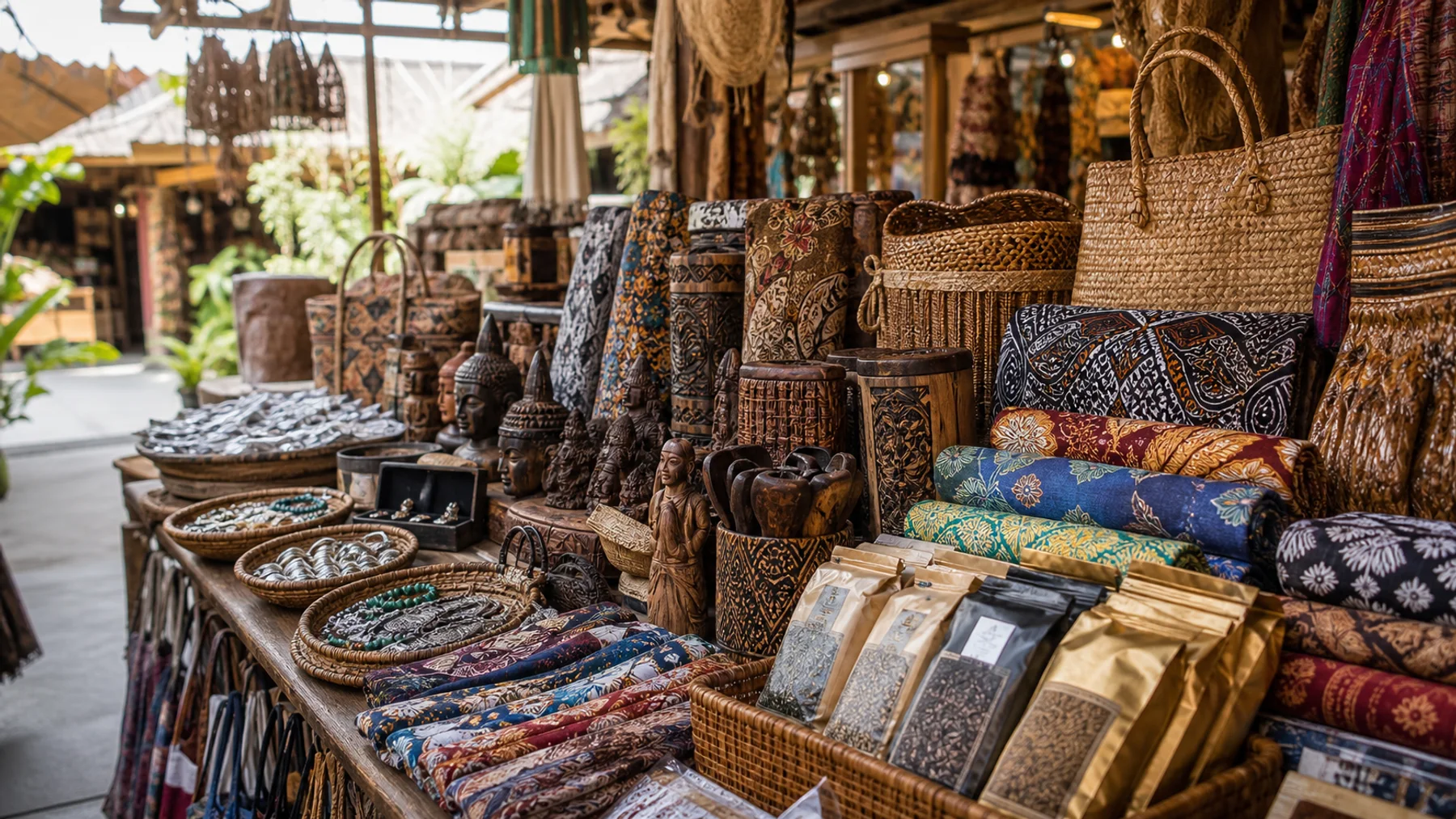
Short answer
Bali is good for shopping if you know what job each place does. Ubud is easy for gifts and browsing. Sukawati is better if market shopping is the point of the trip. Celuk is the silver village. Mas is the wood-carving village near Ubud. Boutiques in Seminyak and Canggu are better for clothes, home goods and polished retail.
The trap is pretending every purchase is deep cultural discovery. Sometimes it is handmade. Sometimes it is a decent workshop product. Sometimes it is a mass-market souvenir. All three can be fine if the price and story match.
Where to shop in Bali: quick decision
Start with the job, not the romance. Bali shopping gets easier when you stop asking for the best place and start asking what you are actually trying to buy.
Bali shopping decision table
| If you want… | Start here | Skip it if… |
|---|---|---|
| Easy souvenirs | Ubud, Sanur or shops near your base | You expect the cheapest possible market price |
| Serious market browsing | Sukawati | You hate bargaining, heat or crowds |
| Silver jewelry | Celuk | You cannot judge material, finish or maker claims |
| Wood carving | Mas | You need carry-on-friendly gifts only |
| Boutique clothes and home goods | Seminyak or Canggu | You want market prices |
| Last-minute gifts | Sanur, Seminyak, Canggu or hotel-area shops | Shopping is the main event |
What is Bali good for shopping?
Bali is strongest for things that fit the island’s actual creative economy: silver, wood carving, textiles, paintings, masks, baskets, home decor, spa products, coffee and small food gifts.
It is also full of tourist-market filler: printed sarongs, Bali T-shirts, beach dresses, bracelets, incense packs, bottle openers, fridge magnets and things shaped like surfboards. That is not automatically bad. People need gifts. The problem starts when a mass-produced object is sold as rare craft at rare-craft prices.
Use this simple split:
What is worth buying in Bali
| Category | Good buy if… | Be careful if… |
|---|---|---|
| Silver | You check material, finish and maker claims | You cannot judge quality but the price is serious |
| Wood carving | You understand size, wood, finish and packing | It is heavy, fragile or vaguely explained |
| Textiles | You know whether it is batik, woven, printed or beach cloth | The seller claims handmade but cannot explain process |
| Paintings | You want decor and can confirm original vs print | You are buying because of pressure |
| Coffee and spices | Packaging, dates and import rules make sense | Animal-processed coffee claims are vague |
| Cheap souvenirs | Price matches the object | You are paying for a story |
Where to shop from your base
Your Bali base changes the smart shopping plan more than the map admits.
Shopping from your Bali base
| Base or area | Use it for | Do not force it if… |
|---|---|---|
| Ubud | Easy gifts, art market, galleries, craft villages nearby | You only need one last-minute airport gift |
| Seminyak / Canggu | Boutiques, clothes, home goods, polished retail | You expect market prices |
| Sanur | Calm browsing, practical gifts, low-drama shopping | Shopping is the main event |
| Nusa Dua | Resort shops, Bali Collection and low-effort gifts | You want market comparison or craft context |
| Sukawati | Market-focused shopping and comparison | You hate bargaining or crowds |
| Celuk / Mas | Silver or wood craft context | You are only buying generic souvenirs |
If you are staying in Sanur, Seminyak or Canggu, do not cross the island for tiny souvenirs. Save the longer route for days when craft, silver, wood or textiles are actually the point.
Best markets in Bali
Ubud Art Market is the convenient one. It sits in central Ubud near the palace area, so it works as part of a walk, lunch stop or culture day. It is good for scarves, bags, baskets, hats, small decor, clothes and quick gifts. It is not a guarantee that everything is handmade or locally produced.
Sukawati Art Market is the more deliberate market stop. Indonesia Travel describes Sukawati as a place for Balinese handicrafts, paintings, jewelry, textiles and household items. It makes sense when you want a shopping stop as part of a driver day around Gianyar, Celuk, Mas or Ubud.
Local morning markets are different from art markets. They are for food, flowers, household goods and daily life, not polished souvenir browsing. Visit respectfully, go early and do not block people who are buying actual groceries.
Tourist strips and beach-area shops in Seminyak, Sanur, Canggu, Kuta and Legian are useful for quick gifts, beachwear and last-minute shopping. They are usually easier than craft villages and often more expensive than local markets.
Craft villages: useful, but not magic
Celuk is known for gold and silver craft. VisitBali describes Celuk in Sukawati, Gianyar, as a center for gold and silver crafts, with shops and displays along the village road. That makes it useful for jewelry browsing and workshop-style stops.
Mas is known for wood carving. Bali’s Government Tourism Office describes Mas in Ubud District, Gianyar, as a village known since the 1930s as a center of wood carvers in Bali. That is a strong craft identity, not just a random shop row.
The trade-off: craft villages can be educational, but they are also commercial. A driver stop may be a genuine workshop, a showroom, a sales stop, or a mix. Ask where you are going before you agree. If the stop feels useful, stay. If it feels like pressure, leave.
Visit a craft village because you want that product category, not because the phrase sounds cultural. Celuk makes sense if silver is the point. Mas makes sense if wood carving is the point. If you only need three gifts before flying home, a curated shop near your hotel is probably the smarter move.
What to buy in Bali
This is the short product layer. For a fuller souvenir shortlist, use what to buy in Bali. This page is more about where to shop, how to compare and when a craft stop is worth the transport.
Best practical buys:
- Silver earrings, rings, pendants or simple bracelets.
- Small wood carvings, masks or panels you can pack safely.
- Textile pieces, sarongs, scarves and bags.
- Paintings or prints for home decor.
- Coffee, spices, tea, sambal and sealed snacks.
- Spa products, soaps, oils and incense.
- Baskets, placemats and small rattan goods.
For most travelers, small beats large. A carry-on-friendly silver piece is easier than a carved statue that needs shipping and regret management.
If you buy textiles, be price-literate. UNESCO recognizes Indonesian batik as intangible cultural heritage, but not every patterned cloth in Bali is batik tulis or batik cap. Printed batik-style fabric is fine when priced and sold honestly.
For food, wood, shells, plant products or animal-adjacent items, check your home-country import rules before buying. The shop selling it is not responsible for your customs line back home.
For budget guardrails, compare craft stops and boutique shopping with the Bali travel budget guide before treating every higher price as a scam.
Buyer checklist:
- Who made it?
- Is it handmade, workshop-made or mass-produced?
- What material is it?
- Is the price fixed or negotiable?
- Can it survive luggage?
- Do you actually want to carry it for the rest of the trip?
What Bali shopping usually costs
Use these as rough planning ranges, not fixed tariffs. Material, size, finish, maker claims, location, bargaining skill, packing and shipping can move the price quickly.
Bali shopping price sanity check
| Shopping choice | Rough IDR range | What it means |
|---|---|---|
| Small souvenir | IDR 10k-75k | Magnets, bracelets, incense, keyrings, small gifts |
| Simple textile or scarf | IDR 50k-250k | Sarongs, scarves, printed cloth or basic bags |
| Silver jewelry | IDR 150k-1m+ depending on weight | Silver content, finish and maker claims matter |
| Small wood carving or mask | IDR 100k-800k+ depending on size | Detail, wood type, finish and packing matter |
| Boutique clothing or home goods | IDR 250k-1.5m+ depending on brand | Better editing, air conditioning, materials and quality control |
| Driver-based shopping day | Often IDR 600k-1.2m+ per car | Useful if you combine Ubud, Sukawati, Celuk or Mas and need luggage space |
The useful question is not whether a thing is cheap. The useful question is whether the object, story, material and transport hassle match the price. An IDR 40k souvenir can be perfect. An IDR 900k necklace can also be fair. A vague story with a serious price is where your eyebrows should move.
Where to shop by area
Ubud works for easy souvenir shopping, art galleries, market browsing, textiles, craft routes and cooking-class add-ons. It is the easiest base for combining shopping with food and culture.
Sukawati and Gianyar work if you are serious about market shopping or craft villages. Pair Sukawati with Celuk or Mas if you have a driver. Do not try to stitch too many craft stops into one day unless shopping is the main activity.
Seminyak works for boutiques, resort wear, home goods and polished retail. Prices can be higher, but the editing, air conditioning and quality control may be better.
Canggu works for surf-adjacent fashion, wellness products, local brands and boutique browsing, but traffic makes casual shopping less casual than the map suggests.
Sanur works for relaxed gifts, practical beach shopping and lower-drama browsing.
Nusa Dua works for resort shops, Bali Collection, polished retail and low-effort gifts when you do not want to turn shopping into a transport project. Use a driver if you want Sukawati, Celuk or Mas from Nusa Dua; that becomes a proper outing, not a casual errand.
Uluwatu works best for shopping near your base: beachwear, surf-adjacent brands, small gifts and dinner-adjacent browsing. Do not build a cross-island shopping day from Uluwatu unless the shopping is genuinely the point.
Bargaining, fixed prices and tourist markup
Markets often allow bargaining. Boutiques usually do not. Galleries vary. Workshops vary. A fixed-price shop is not automatically ripping you off; a bargaining market is not automatically cheap.
Reasonable bargaining means:
- Ask the price.
- Compare a few stalls.
- Offer politely.
- Smile when walking away.
- Do not insult the seller over tiny differences.
- Pay when the price fits your budget.
This is not a scam: a seller quotes tourists more than locals, then expects negotiation. That is market theater. Annoying? Sometimes. Criminal? Usually not.
This can be a problem: a seller lies about material, origin, handmade status or antique value to justify a high price. That is different from normal bargaining.
What to avoid
Avoid wildlife products, coral, shells with unclear legal status, antiques without documentation, religious objects you do not understand, fake branded goods, and anything that may cause customs trouble at home.
Avoid large wooden pieces unless you understand packing, shipping, treatment and import limits.
Avoid investment jewelry, gemstones or art unless you know the category. Bali is a fine place to buy something you love. It is a bad place to discover you are not an art appraiser.
Avoid pressure stops. If a driver, guide or seller makes the buying feel compulsory, you are allowed to leave.
Cash, cards and packing
Bring small cash for markets. Many boutiques and larger shops accept cards, but market stalls may prefer cash or QR-style local payments that are not always useful for foreign visitors. Use the QRIS for tourists guide before assuming every QR code is easy with a foreign payment setup. Do not wave a large note around and then complain nobody can make change.
For packing, assume the airline will be less gentle than the seller promises. Wrap fragile items, keep jewelry in your carry-on, and do not bury liquids in soft clothing unless you enjoy unpacking scented oil from everything you own.
For bigger purchases, ask who is responsible if shipping fails or the piece breaks. A vague promise that the shop can ship is not enough. You want the carrier, cost, insurance, tracking and what happens if customs asks questions.
Smart Gianyar craft-shopping route
This route works best if you are already in Ubud, or if you have a driver and want a craft-focused half day from another Bali base.
- Start in central Ubud for the market and nearby shops.
- Add Mas if wood carving interests you.
- Add Celuk if silver is a serious shopping goal.
- Add Sukawati if you want a bigger market comparison.
- Stop before everyone is tired and bargaining gets stupid.
If you are not staying in Ubud, build the route around transport. Bali shopping is spread out. A private driver can be worth it if you plan to visit multiple craft stops and carry purchases. Use the Bali private driver guide before comparing random day-rate quotes.
FAQ
What is Bali best for shopping?
Silver, wood carving, textiles, paintings, baskets, home goods, coffee, spices and practical souvenirs. The best category depends on your route: Ubud is easiest for browsing, Sukawati is better for market comparison, Celuk is the silver stop and Mas is the wood-carving stop.
Where is the best area for shopping in Bali?
For most first-time visitors, Ubud is the easiest shopping base because the market, galleries, craft routes and food stops are close together. Seminyak and Canggu are better for boutiques and polished retail. Sanur is better for calm, practical gifts. Sukawati, Celuk and Mas are worth adding when market or craft shopping is actually the point.
Is Ubud Art Market authentic?
It is a real market and a useful tourist shopping stop. It is not a guarantee that every item is handmade or local. Ask what you are buying.
Is Sukawati cheaper than Ubud?
It can be better for market-style shopping and comparison, but prices depend on item, negotiation, season and seller.
Should I visit Celuk for silver?
Yes if silver jewelry or craft context matters to you. If you only want a cheap trinket, any souvenir area may be enough.
Can I pay by card in Bali markets?
Do not rely on it. Boutiques, larger stores and galleries often accept cards, but market stalls may prefer cash or local QR-style payments. Carry small rupiah notes and keep card payment as a bonus, not the whole plan.
Should I bargain in Bali?
In markets, often yes. In boutiques and formal galleries, usually less so. Keep it polite and do not treat every price as a fight.
What should tourists avoid buying in Bali?
Avoid wildlife products, coral, shells with unclear legal status, undocumented antiques, fake branded goods, religious objects you do not understand and anything too large or fragile to pack responsibly. If customs, shipping or material claims are unclear, skip it.
Sources for changing details
Shop names, opening hours, product claims, prices, customs rules, product registration, access routes and pickup points can change. Use these pages before building a plan around a specific store, market or purchase.

I'm the person behind Simply Indonesia. I lived in Yogyakarta and Bali for more than five years, which is long enough to know that Indonesia is amazing, messy, generous, occasionally confusing and very bad at fitting into generic travel-blog advice.
I'm also a manual-brew coffee nerd, dangerously loyal to sate klathak, and far too interested in the small practical details that decide whether a trip feels smooth or stupidly annoying.
I write these guides for travelers who want the useful version: how to get out of the airport, where to stay, what food actually tastes like, when paying extra is normal, and when something really deserves a hard no.
No fake hidden gems. No "paradise awaits" nonsense. No panic about every 50k IDR price difference.