Short answer
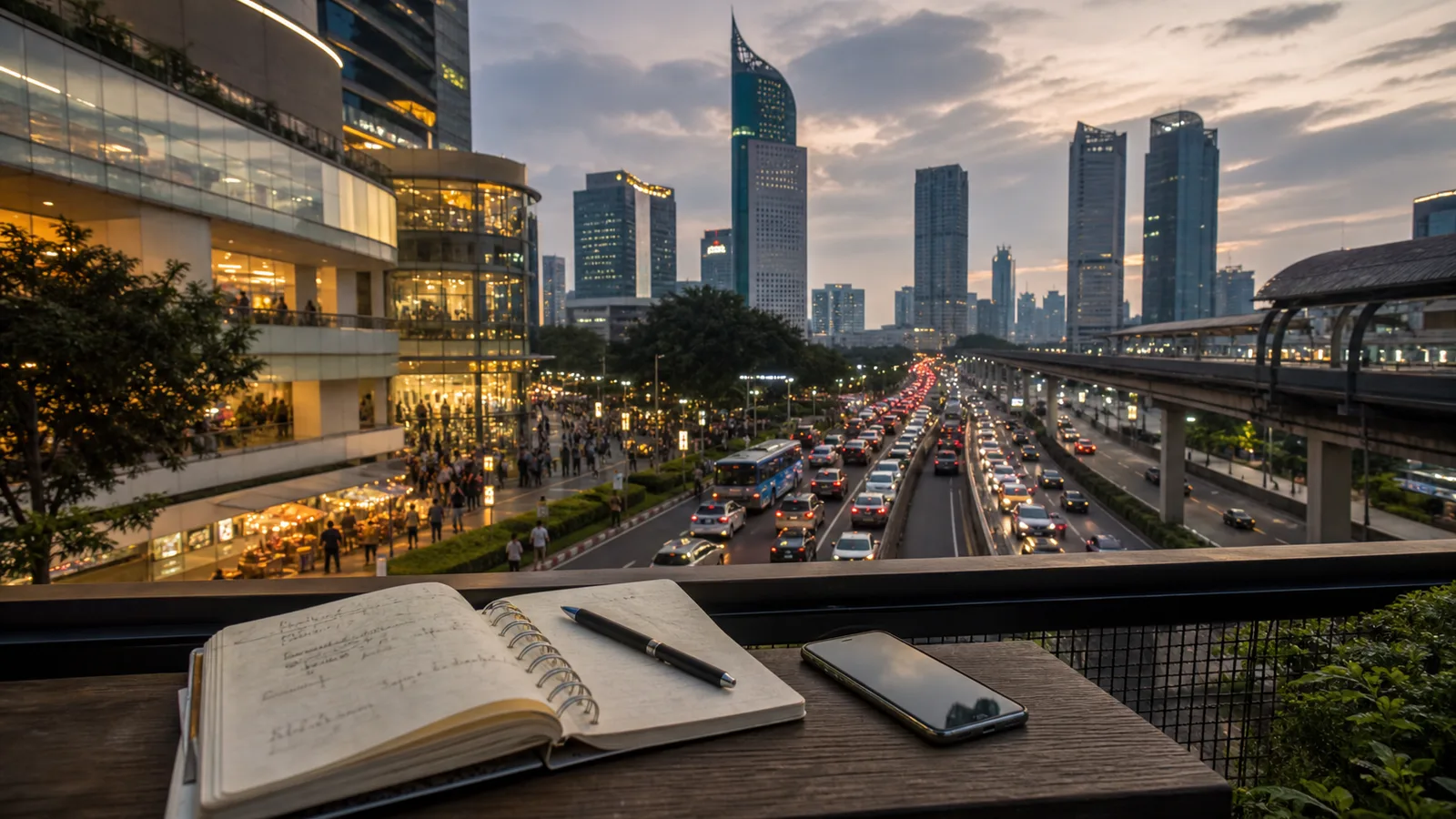
Jakarta is famous for malls, food, traffic, business, national landmarks and the awkward truth that Indonesia is bigger and more complicated than a Bali itinerary suggests.
The city is not famous because it is cute. It is famous because it is useful. Jakarta is where government, finance, media, embassies, shopping, concerts, office towers, old port history, Betawi food, Chinese-Indonesian neighborhoods and commuter life all collide.
That can be tiring. It can also be the most honest Indonesia city stop on a first trip, if you stop asking it to behave like a beach town.
What is Jakarta best known for?
Jakarta is best known for being Indonesia’s main urban engine. Even with the Nusantara capital transition moving toward a political-capital target in 2028, Jakarta is still where many travelers meet the country’s business, bureaucracy, media, embassies, malls and big-city habits in one place.
For visitors, the useful version is this:
| Jakarta is famous for | Best for | Real trade-off |
|---|---|---|
| Malls | Food, AC, errands, families, rain plans | They are practical, not automatically soulful |
| Betawi and city food | Soto Betawi, kerak telor, nasi uduk, gado-gado, night eating | The best food day needs area planning |
| Monas and Merdeka area | National-symbol sightseeing | Check access and hours before going |
| Istiqlal Mosque | Religious architecture and national symbolism | Respect prayer times, dress and visitor rules |
| Kota Tua | Old Batavia streets, museums and colonial-era buildings | Better early or with a realistic heat plan |
| Glodok | Chinatown, temples, markets and food | Sidewalks, traffic and crowds require patience |
| MRT corridor | Central and South Jakarta movement | Useful line, not whole-city magic |
| Business districts | Hotels, meetings, restaurants, skyline, events | Convenient locations cost more |
Let us be honest: Jakarta’s fame is not one clean postcard. It is a system. The sooner you accept that, the easier the city gets.
Where to start in Jakarta
If this is your first Jakarta stop, do not try to see “everything Jakarta is famous for” in one day. Pick a lane.
| Time | Simple plan | Why it works |
|---|---|---|
| One day | Monas/Merdeka area, Istiqlal from outside or visitor route, then Grand Indonesia or Sarinah | National-symbol context plus a practical central reset |
| Two days | Day 1 central landmarks and malls, day 2 Kota Tua and Glodok | Splits modern Jakarta and old-city Jakarta without too much crossing |
| Three days | Add Blok M, South Jakarta food, MRT corridor or a specific shopping plan | Gives the city room to be useful instead of rushed |
Jakarta vs Bali
Jakarta is not Bali with worse beaches. It is a different travel job.
Bali sells scenery, resorts, beaches, temples, wellness and slower vacation logic. Jakarta sells urban Indonesia: food, malls, business, national institutions, concerts, old port history, commuter systems and the everyday machinery of a giant city.
If you want a soft landing, start with Bali. If you want to understand why Indonesia is not just a holiday island, give Jakarta a real day or two and plan it properly.
Malls are practical infrastructure
Jakarta is famous for malls because malls solve real Jakarta problems.
Air-conditioning matters when the day is hot. Toilets matter when you are out for hours. Food courts matter when your group cannot agree. Clear pickup points matter when ride-hailing in a huge city. Covered space matters when the rain shows up.
This is why Jakarta mall culture is not just shopping. It is social life, date night, office lunch, family weekend, business meeting, errand run, cinema plan, coffee stop and storm shelter. Pretending malls are automatically shallow is a lazy take. Some are boring. Some are useful. Some are both.
Best for first-timers: Grand Indonesia and Plaza Indonesia around the Hotel Indonesia roundabout area.
Best for Indonesian products without a market mission: Sarinah.
Best for polished business and luxury logic: Plaza Indonesia, Pacific Place, Plaza Senayan and Senayan City.
Best for area-based family days: Pondok Indah Mall, Kota Kasablanka, Central Park or Mall Kelapa Gading, depending on where you are staying.
The most useful mall is usually the one near your hotel, MRT stop, restaurant plan or meeting. Do not cross half the city for a mall unless that mall is the point of the day.
Famous food in Jakarta
Jakarta food is famous because the city collects Indonesia and then adds Betawi identity on top.
The Jakarta government culinary pages point to Betawi dishes such as soto Betawi, soto tangkar, gado-gado, kerak telor, nasi uduk, asinan Betawi, kue pancong and gabus pucung. That is the local anchor. Then the city adds Chinese-Indonesian food, Minang restaurants, Javanese warungs, Manado spice, office lunches, mall dining and late-night streets.
For a first visitor, do not try to “complete” Jakarta food. That is how you turn dinner into homework.
Use this instead:
| Food angle | What to try | Best for |
|---|---|---|
| Betawi basics | Soto Betawi, kerak telor, nasi uduk, asinan Betawi | Understanding local Jakarta identity |
| Street and casual food | Ketoprak, gado-gado, martabak, satay, noodles | Quick meals and low-drama snacking |
| Chinatown food | Glodok area classics and Chinese-Indonesian stops | Food walks with history attached |
| Mall food | Group meals, clean toilets, clear menus, AC | Families, rain, tired travelers |
| Night food | Pecenongan, Sabang-style central eating, South Jakarta clusters | Evening plans when traffic calms a bit |
The annoying part is distance. Jakarta food is spread out. A famous stall across town may not be worth a one-hour ride unless you care about that dish specifically. Choose food by neighborhood, not just by internet ranking.
Monas, Istiqlal, Kota Tua and Glodok
These are the main classic anchors when someone asks what Jakarta is famous for.
Monas is the obvious national symbol. The Jakarta official landmark page identifies Monas in Central Jakarta as a monument to Indonesia’s struggle for independence, built in Merdeka Square. It is a giant national statement in the middle of the city. Go for the symbolism, Merdeka-area orientation and scale. Check current access before going, especially if you care about the museum or viewing deck.
Istiqlal Mosque is the other essential Central Jakarta landmark. The official mosque site presents it as a symbol of independence and religious moderation, and it sits near Jakarta Cathedral. Visit respectfully: dress properly, avoid treating a prayer hall like a photo studio, and check current visitor procedures.
Kota Tua is old Batavia: Fatahillah Square, museums, colonial-era buildings and the Jakarta Kota station area. It shows the older port-city layer beneath the office towers and malls. The trade-off is comfort. It can be hot, crowded and uneven underfoot. Go earlier and combine nearby stops sensibly.
Glodok is Jakarta’s Chinatown, tied to trade, temples, markets and food. The Jakarta Barat local government page is the useful official anchor for neighborhood-level updates. For travelers, the appeal is walking, eating, temple stops and seeing Jakarta’s Chinese-Indonesian layer. The catch: it is busy. Wear decent shoes and keep your route realistic.
Famous neighborhoods and areas
Jakarta is famous by area, not just by attraction.
Central Jakarta is the easiest first-timer base for Monas, Istiqlal Mosque, Merdeka Square, National Museum logic, Grand Indonesia, Plaza Indonesia, Sarinah, government buildings and many hotels. It is not the coolest area. It is the easiest to understand.
South Jakarta explains modern Jakarta better than most monument lists. Blok M is useful for food, nightlife and MRT access. Senopati and SCBD are restaurant, bar, business and polished-wallet territory. Kemang has international restaurants and residential nightlife energy. Kuningan is offices, embassies, malls and traffic that can test your optimism.
West Jakarta gives you Kota Tua and Glodok, plus big mall logic around places like Central Park. North Jakarta gives you Ancol, Sunda Kelapa, Kelapa Gading food and malls, PIK-style lifestyle areas and Thousand Islands access logic. East Jakarta is less likely to be a first-trip base, though TMII still matters.
Best first-time split: stay central if you want landmarks and easy city orientation; stay south if your trip is about food, nightlife, meetings or friends who live there. Cheap is not always smart in Jakarta. Location is part of the price.
MRT, transport and urban scale
Jakarta is famous for traffic, but that is not the full transport story anymore.
MRT Jakarta gives visitors a clean, predictable north-south corridor between Central and South Jakarta. The official MRT information describes the line from Lebak Bulus in South Jakarta to Bundaran HI in Central Jakarta. For tourists, that means the line can help with Bundaran HI, Dukuh Atas, Senayan, Istora, Blok M and parts of South Jakarta.
The MRT is excellent when your hotel and destination sit near stations. It is almost useless when your plan is Kota Tua, Ancol, the airport or a restaurant far from the line. That is not failure. That is geometry.
Jakarta also has Transjakarta, KRL commuter rail, airport rail, taxis, Bluebird, Grab and Gojek. The right answer changes by route, luggage, heat, rain and tolerance for waiting. People who insist on one perfect transport mode for the whole city are usually making their own day worse.
Business, events and big-city energy
Jakarta is famous as a business city. That matters even if you are not wearing a blazer.
Business districts shape where better hotels are, where polished restaurants cluster, why traffic spikes, why malls have serious dining, and why many international visitors pass through for meetings, conferences or embassy work. SCBD, Sudirman, Thamrin, Kuningan and Senayan are not just map labels. They are how a lot of Jakarta runs.
Events are part of the same story. Jakarta hosts concerts, trade fairs, sports events, exhibitions, mall festivals, religious holiday activity and annual city events. Jakarta Fair at JIExpo Kemayoran is the big obvious example, with its own official site and changing annual details. JIExpo itself is a major convention and exhibition venue.
The practical advice: if you are coming for an event, choose your hotel by venue access first and sightseeing dreams second. A hotel “not that far” from JIExpo, GBK, Istora or SCBD can still be a bad idea at the wrong time of day.
Rainy-day practicality
Jakarta is famous for being practical because it has to be.
Rain can change the day quickly. Heat can make a short walk feel longer than it looks. Traffic can make a brilliant plan stupid by 5 p.m. This is why malls, MRT stations, hotel locations, ride-hailing pickup points and simple area planning matter.
Good rainy-day Jakarta is not complicated:
- Pick a major mall near your base.
- Eat somewhere easy.
- Use MRT only if both ends fit the line.
- Move outdoor heritage walks earlier in the day.
- Keep one flexible indoor option in reserve.
- Do not schedule Kota Tua, Glodok, Monas, South Jakarta dinner and a North Jakarta event in one heroic day.
Rain is not a disaster. Bad routing is the disaster.
What to buy in Jakarta
Jakarta is good for buying practical things and decent gifts, not just souvenirs with airport energy.
Useful buys include Indonesian coffee, snacks, sambal, tea, batik in fixed-price retail settings, local fashion, skincare, books, design items, travel supplies, pharmacy items and better shoes.
Sarinah is the easiest central stop for Indonesian brands and gifts. Thamrin City is better if you want more batik and textile hunting. Malls are good for snacks, skincare, electronics accessories and luggage fixes. Glodok is more specialized and better with a purpose.
Skip the fantasy that every good purchase must come from a chaotic market. Sometimes the fixed-price store with air-conditioning is the correct choice.
Is Jakarta worth visiting for this?
Yes, if you want urban Indonesia, food, national landmarks, a modern MRT corridor, old Batavia, Chinatown, useful shopping, or a conference, concert or sports event.
No, if your Indonesia trip is only beaches, quiet nature and a simple highlight reel. Jakarta can be rewarding, but you need to plan it like a big city.
Related guides
FAQ
What is Jakarta most famous for?
Jakarta is most famous for being Indonesia’s largest working city: business districts, malls, traffic, food, national landmarks, old Batavia, Chinatown, events and urban scale. For travelers, the practical anchors are malls, Betawi food, Monas, Istiqlal Mosque, Kota Tua, Glodok and the MRT-linked Central/South Jakarta corridor.
Is Jakarta famous for food?
Yes. Jakarta is famous for Betawi dishes such as soto Betawi, kerak telor, nasi uduk, gado-gado, soto tangkar and asinan Betawi, plus food from across Indonesia. The city is also strong for mall dining, night food, Chinatown eating and office-lunch culture. Pick food by area or you will spend more time in traffic than eating.
Are Jakarta malls worth visiting?
Yes, if you use them properly. Jakarta malls are useful for food, toilets, air-conditioning, shopping, errands, families, meetings and rain plans. Do not treat them as sacred culture. Do not dismiss them as meaningless either. They are part of how the city works.
What are the classic sights Jakarta is known for?
The classic visitor sights are Monas, Istiqlal Mosque, Jakarta Cathedral, Kota Tua, Glodok, Museum Nasional, Sunda Kelapa, Ancol and TMII. Not all belong in one day. Choose by area, check current opening details and leave room for traffic.
Is Jakarta good for first-time visitors to Indonesia?
Jakarta is good for first-time visitors who want context, food, transport, shopping and a real capital-city view of Indonesia. It is not the easiest emotional sell. If you want beaches and soft scenery, go elsewhere first.
How many days do you need in Jakarta?
One focused day can cover a Central/West Jakarta classic route. Two days is better if you want malls, food, Monas or Istiqlal, Kota Tua, Glodok and a South Jakarta evening. More than that makes sense for business, events, friends, shopping, food research or day trips.
Is Jakarta only famous for traffic?
No. Traffic is real and planning around it is non-negotiable, but reducing Jakarta to traffic is lazy. The city is also famous for food, malls, business, landmarks, events, Chinatown, old port history, transport upgrades and everyday urban life.
Sources for changing details
Opening hours, visitor rules, event details, transport options, fees, access rules and attraction conditions can change. Use these pages before building a time-sensitive plan around exact details.

I'm the person behind Simply Indonesia. I lived in Yogyakarta and Bali for more than five years, which is long enough to know that Indonesia is amazing, messy, generous, occasionally confusing and very bad at fitting into generic travel-blog advice.
I'm also a manual-brew coffee nerd, dangerously loyal to sate klathak, and far too interested in the small practical details that decide whether a trip feels smooth or stupidly annoying.
I write these guides for travelers who want the useful version: how to get out of the airport, where to stay, what food actually tastes like, when paying extra is normal, and when something really deserves a hard no.
No fake hidden gems. No "paradise awaits" nonsense. No panic about every 50k IDR price difference.