Short answer
For most visitors, the best things to do in Yogyakarta are:
- Visit Prambanan, but check current tickets, hours and access rules before you plan the day around it.
- Spend a city day around the Kraton, Taman Sari, Alun-Alun and Malioboro.
- Eat gudeg once, knowing it is sweet.
- Learn enough batik basics before shopping.
- Visit Kotagede for silver, old streets and a slower side of the city.
- Use Prawirotaman as a food, cafe and easy evening base.
- Add ARTJOG or galleries if the current event calendar supports it.
Do not turn this into a punishment list. Jogja works better when you choose a few things properly instead of rushing through ten half-visits.
What to check before you go
| Field | Current status |
|---|---|
| Stable planning facts | Yogyakarta is strongest for palace/city culture, Prambanan, batik, food, shopping, art and nearby day trips |
| Dynamic facts | Temple ticket categories, temple hours, access rules, Kraton tickets, ARTJOG dates, market hours, transport details and weather disruptions |
| Recheck before travel | Any paid ticket, timed entry, public holiday opening, event schedule or day-trip transport plan |
Compare the options
| Thing to do | Best for | Hassle level | Check before you go |
|---|---|---|---|
| Prambanan | Big temple day, first-timers | Medium | Tickets, opening hours and access rules |
| Kraton area | Culture and city history | Low to medium | Opening hours and ticket windows |
| Malioboro and Beringharjo | Convenience, shopping, snacks | Low | Market hours and holiday crowds |
| Prawirotaman | Food, cafes, easy evenings | Low | Traffic and restaurant hours |
| Kotagede | Silver, old streets, slower day | Medium | Workshop and shop hours |
| Gudeg | Signature food | Low | Opening hours and queues |
| ARTJOG and galleries | Art-focused travelers | Medium | Dates, venue, tickets and program |
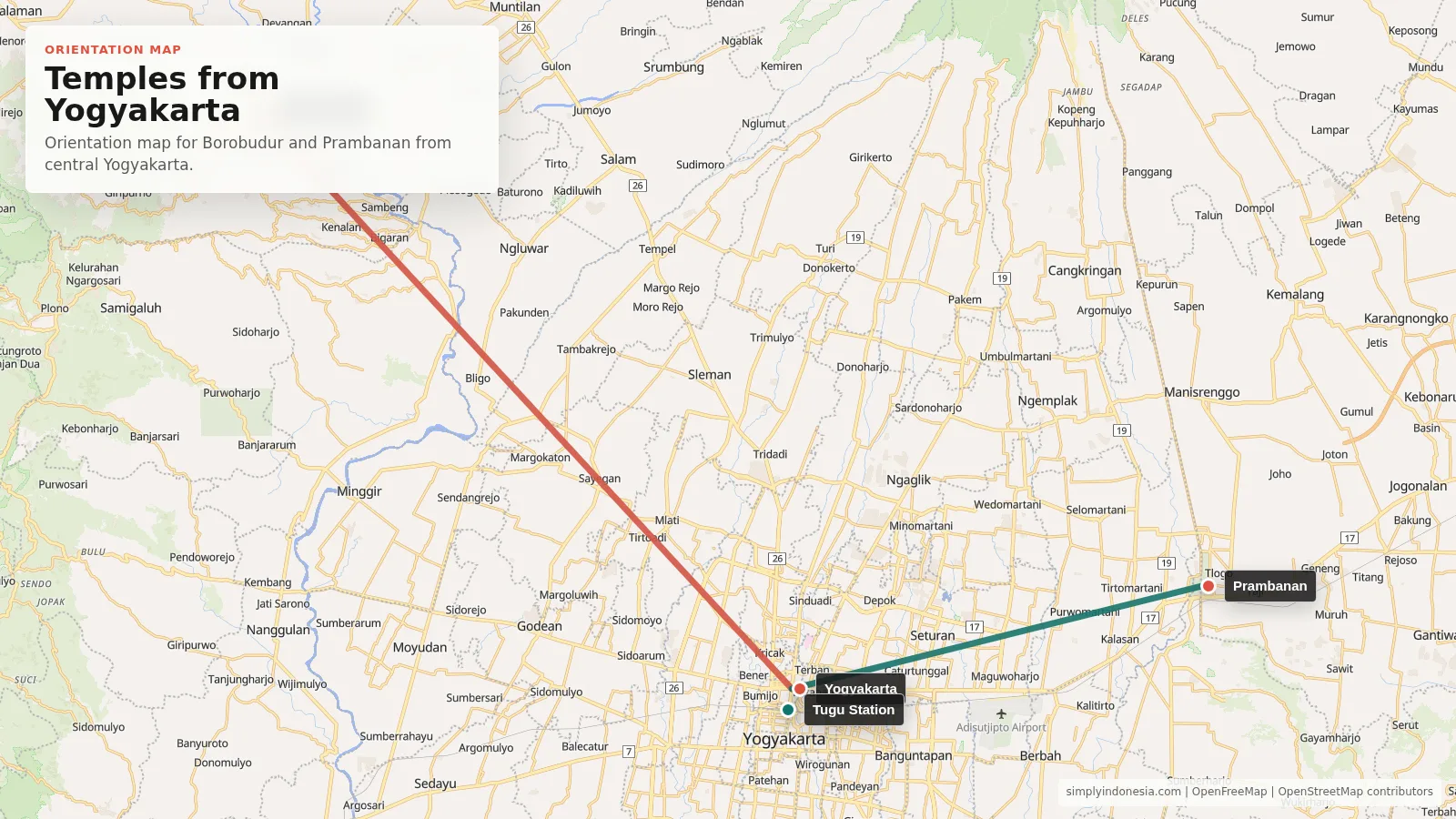
Prambanan
Prambanan is the easiest major temple decision from Yogyakarta. It is close enough to fit into a half day, important enough to deserve its own planning, and structured enough that ticket and access details matter.
Use the official InJourney Destination ticket site for current ticket categories and access rules. The same official ticket platform also carries Borobudur, which matters because travelers often compare the two. Do not decide from an old blog screenshot. Temple ticket systems change, and they usually change exactly when someone has built a fragile itinerary around yesterday’s rule.
Prambanan is the better fit if you want a strong temple visit without turning the whole day into logistics. It can be paired with Ratu Boko, but only if you check timing and transport. A driver or tour can be worth it when you want a clean return after sunset or a performance.
Kraton and the old-city core
The Kraton area gives Jogja its center of gravity. Pair it with Taman Sari, Alun-Alun, museums, Kauman, nearby food and a sensible walk. Keep the page practical: opening times, ticketing and performance schedules need current checks.
The Kraton is not just another attraction on a list. It is part of the city structure. That does not mean every visitor needs a lecture. It means the guide should give enough context to make the area feel legible.
UNESCO’s Cosmological Axis listing is useful here because it explains why the Kraton, Tugu, Malioboro and the southward route are connected in more than a tourist-map way. Reader translation: the city center has logic. You do not need to memorize the philosophy, but you should not treat the palace area like a random photo stop either.
Malioboro and Beringharjo
Malioboro is convenient, crowded and useful. Beringharjo is good for batik, textiles, snacks, spices and market browsing. Teras Malioboro is part of the current shopping landscape after street-vendor relocation.
Is it touristy? Yes. Is that automatically bad? No. Sometimes touristy means central, easy, open, and full of things travelers actually need.
Borobudur: worth it, but not casual
Borobudur is not in Yogyakarta city, but it belongs in the decision set because many travelers use Jogja as the base. It is a stronger planning commitment than Prambanan. Current access rules, ticket type, climb access, transport and sunrise/sunset products should all be checked through official channels before you build the day.
Worth it if Borobudur is one of the reasons you came to Java. Less worth it if you are trying to squeeze it into a short trip just because everyone online makes you feel lazy. If you only have one temple day and hate logistics, Prambanan is easier. If Borobudur matters to you, give it the space it needs.
Eat gudeg
Gudeg is the signature dish and the page should say the important part early: it is sweet young jackfruit, usually served with rice and sides such as krecek, areh, egg, chicken, tofu or tempeh.
Try it once. If you love it, great. If you do not, move on like an adult and eat something else. A dish can be culturally important without becoming your personal favorite.
Learn batik before shopping
Batik is one of the strongest Yogyakarta topics. The practical goal is not to make readers into textile experts. It is to stop them from paying handmade prices for printed fabric.
The buying guide should explain batik tulis, batik cap and print before recommending shops or workshops. That is the useful part.
A short workshop can be a better first step than a shopping spree. Once you have seen wax, cloth and process up close, vague sales language becomes easier to spot. That is not cynicism. That is basic buyer literacy.
Kotagede
Kotagede works for travelers who want a slower area with silver craft, old lanes, local markets and Mataram history. It is not as frictionless as Malioboro. That is part of the point.
Use Kotagede as a half-day craft and neighborhood stop, not as a ten-minute shopping errand. Silver shops, workshops and heritage walks need current checks. Do not assume every listing is open, every workshop takes walk-ins, or every silver item is handmade in the way you imagine.
Prawirotaman
Prawirotaman is the easy traveler-zone counterweight to Malioboro. It has guesthouses, cafes, restaurants, art links and a calmer evening rhythm. It is useful for staying, eating and recovering after a temple day.
This is not where every “real” Jogja experience lives. It is just a practical area. Practical is allowed.
It is also a sensible base if your trip leans toward food, cafes, independent hotels and art-adjacent browsing. It is weaker for Tugu Station logistics. Pick the area based on how you will actually move, not on which neighborhood sounds cooler.
ARTJOG and galleries
ARTJOG can be a strong reason to time a Yogyakarta trip, but event facts are fragile. Dates, venue, ticketing, programs and opening rules should come from official ARTJOG sources before you plan around them.
For planning advice, explain who the art scene is good for and how to combine it with Prawirotaman, Tirtodipuran, JNM, galleries and hotel areas. For annual details, point to the ARTJOG guide that carries the current year’s dates near the top.
At last check, ARTJOG official pages listed the 2026 edition for 19 June to 30 August 2026 at Jogja National Museum. That is useful if your dates line up. It still does not mean you should buy tickets from a random channel or assume every program runs every day.
How to choose your own list
If you have one full day, do a city day: Kraton area, Malioboro/Beringharjo, one proper meal and maybe a museum or batik stop. If you have two full days, add Prambanan or Borobudur. If you have three or more, add Kotagede, Prawirotaman evenings, art and a slower food plan.
Here is the real trade-off: Yogyakarta is compact enough to make overplanning tempting, but hot, busy and spread out enough to punish it. A good Jogja trip has a few solid priorities. It does not have seventeen “quick stops” pretending to be culture.
Common mistakes
- Ranking everything as if every traveler has the same trip.
- Assuming temple tickets, hours and access rules are still the same as last year.
- Treating Malioboro as either magical or worthless.
- Eating gudeg without warning readers that it is sweet.
- Forgetting that airport and day-trip logistics shape the whole visit.
FAQ
What is the number one thing to do in Yogyakarta?
For many first-timers, Prambanan or the Kraton area. The right answer depends on whether you want the big temple sight or city culture first.
Is Borobudur or Prambanan better from Yogyakarta?
Prambanan is easier logistically. Borobudur is a bigger planning decision because access and ticket categories need careful checking.
Can you see Yogyakarta in two days?
Yes, but keep it tight: one city day and one temple day. Three nights is more comfortable.
Are Yogyakarta attractions expensive?
Some are cheap, some have tourist pricing, and some are worth paying for convenience. This is not automatically a scam. It is a price and access structure.
Sources for changing details
Opening hours, ticket rules, attraction access, road conditions, weather, safety guidance, tour availability and local operating details can change. Use these pages before relying on exact things-to-do details.

I'm the person behind Simply Indonesia. I lived in Yogyakarta and Bali for more than five years, which is long enough to know that Indonesia is amazing, messy, generous, occasionally confusing and very bad at fitting into generic travel-blog advice.
I'm also a manual-brew coffee nerd, dangerously loyal to sate klathak, and far too interested in the small practical details that decide whether a trip feels smooth or stupidly annoying.
I write these guides for travelers who want the useful version: how to get out of the airport, where to stay, what food actually tastes like, when paying extra is normal, and when something really deserves a hard no.
No fake hidden gems. No "paradise awaits" nonsense. No panic about every 50k IDR price difference.